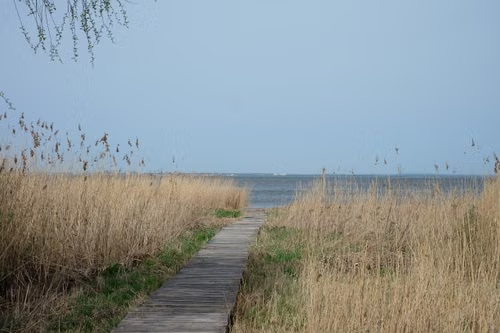
The listing photos showed nothing but open water. The winter walk-through showed nothing but open water. By the second week of June that same backyard showed a wall of scrub oak forty feet deep. A Portsmouth couple bought the house anyway and spent one summer getting the bay back. Their fix was not a landscaper with a hedge trimmer. It was the phased tree removal and land clearing Newport RI crews run every season, starting on the water side and working inward. Done in that order, selective clearing gives back the view and the yard inside one season.
An Overgrown Lot Swallowed The Whole Water View
Nobody plants a view out of existence on purpose. It happens across fifteen quiet years, one uncut season at a time, and coastal lots do it faster than inland ones because salt-tolerant scrub fills any gap it finds. What usually turns up on these bay-side properties is not one dramatic hazard tree. It is a thicket of volunteer oaks, bittersweet vine that had the run of the place, and a hedge that quit being a hedge around 2015. From the deck the couple could hear the water and see none of it.
Two problems sat on top of the cosmetic one. A pair of heavy limbs leaned over the service drop feeding the house, and a third had grown into the roofline. Anything touching or hanging near overhead power lines is off limits to a homeowner. Stay clear of it, call the utility, and hire a trained, insured crew. Even a line-clearance trimmer who is not a qualified electrical worker must be trained and competent in the minimum approach distances for the voltages present. Nobody clears that bar with a ladder and a rented saw.
What Selective Clearing Actually Removed
Selective is the word doing the work here. The crew walked the lot with the homeowners before anything started and marked what stayed. On this job that meant two mature red maples and a shade oak near the driveway. Everything else got sorted into remove, limb up, or leave alone. That marking session keeps a clearing job from turning a yard into a parking lot.
Example scenario: reclaiming a Narragansett Bay view across one summer season, worked in phases
| Phase | What it removed | Visible result |
| Assessment and marking | Survey of the overgrowth; hazard trees flagged near the house and overhead lines | A phased plan and a firm estimate |
| Selective tree removal | Overgrown scrub oak and leaning limbs along the bay side | First real glimpse of open water |
| Brush and undergrowth clearing | Years of tangled brush and invasive growth choking the lot | A walkable, usable yard emerges |
| Stump grinding | Remaining stumps ground below grade | Level ground ready for lawn or patio |
| Final cleanup and haul-off | Debris, wood chips, and cut wood removed from site | Full Narragansett Bay view restored |
Phase two is the part homeowners should hand off. Dropping a leaning forty-foot oak over a fence line is a different trade from cutting firewood. OSHA’s logging standard requires a chain saw to be fueled and started at least 10 feet from any ignition source. That is one line among many a weekend crew with a rented saw cannot hold to. Ten years ago this work meant a bucket truck, a rope, and four people dragging brush by hand. Today the same removal often runs off a hydraulic grapple saw truck that cuts and holds the limb in one motion, so the wood never free-falls onto the lawn.
The View And Yard That Came Back
The water arrived in stages, which surprised them. After the bay-side removals the view was a slot, not a panorama. Brush clearing widened it, and stump grinding made the ground worth standing on. Keeping those maples turned out to be the smarter half of the plan. Phys.org rounded up research in May 2026 that found trees cut the urban heat island effect by almost 50% globally. The couple noticed a small version of it on a patio that sits in maple shade after two.
The yard came back before the view did. Grass by August, on ground that had been impassable thicket in May.
The ospreys stayed, for the record, and the nest on the channel marker still works at dusk. That is a side note. The point is that a phased plan does not have to mean an empty lot.
How long does clearing an overgrown coastal lot take?
The phases spread across one summer with gaps between them, not one continuous week of noise. Assessment and the estimate came first, and the removals happened over a few days. Stump grinding waited until a machine could cross dry ground. Weather and access stretch a bay-adjacent calendar more than the cutting itself does.
Will clearing leave the property looking bare?
Not if the plan names what stays before anything is cut. Selective clearing takes out the growth blocking the sightline and the limbs threatening the structure. It leaves the mature shade trees that make a yard usable in August. The bare-lot look comes from grading a whole parcel, which is a different job.
What A Reclaimed Coastal Yard Is Worth
The value is not only the postcard from the deck. A 2026 mapping study of European cities found that neighborhoods keeping canopy above 30% ran up to 10 degrees C cooler than nearby hot spots. That is a solid argument for keeping the right trees while the wrong ones come out. A yard you can walk, mow, and sit in carries its own worth. The couple put a fire pit where two stumps used to be.
Order matters more than equipment. Assess, remove selectively, grind the stumps, haul the debris off, and a lot that lost its water view gives it back in a season. Ask any outfit doing tree removal and land clearing Newport RI property owners hire each spring, and the advice lands the same. The trees you keep decide whether a finished yard reads as reclaimed or just cleared. Walk the property before the first cut and mark the keepers.