A few years ago, matcha was a niche drink found mostly in Japanese tea houses and specialist cafés. Today it is everywhere. Café menus feature matcha lattes alongside flat whites, supermarkets stock matcha-flavoured snacks and social media is filled with videos of bright green drinks swirled with milk over ice. Its vivid colour, earthy flavour and reputation as a gentler alternative to coffee have won fans across Australia.
Many people now want to recreate their café favourite at home, and with the right approach, it is easier than you might think.
What Matcha Actually Is
Matcha is made from green tea leaves that are shaded before harvest, which increases chlorophyll and gives the leaves their rich colour. After harvesting, the leaves are steamed, dried, de-stemmed and ground into a fine powder. Unlike regular tea, where leaves are steeped and discarded, matcha is whisked into water or milk, so you consume the whole leaf.
This gives matcha its distinctive taste: grassy, slightly sweet and with a savoury depth often described as umami.
Grades and Uses
Matcha comes in different grades. Ceremonial grade is typically the highest quality, intended for drinking with water in the traditional style. Culinary or latte grades are designed to be mixed with milk, sweeteners or used in baking, where their stronger flavour stands up to other ingredients.
For home lattes, a quality matcha powder delivers consistent colour and flavour that blends smoothly with milk, giving the café-style result many people are hoping for without requiring tea ceremony skills.
Essential Tools
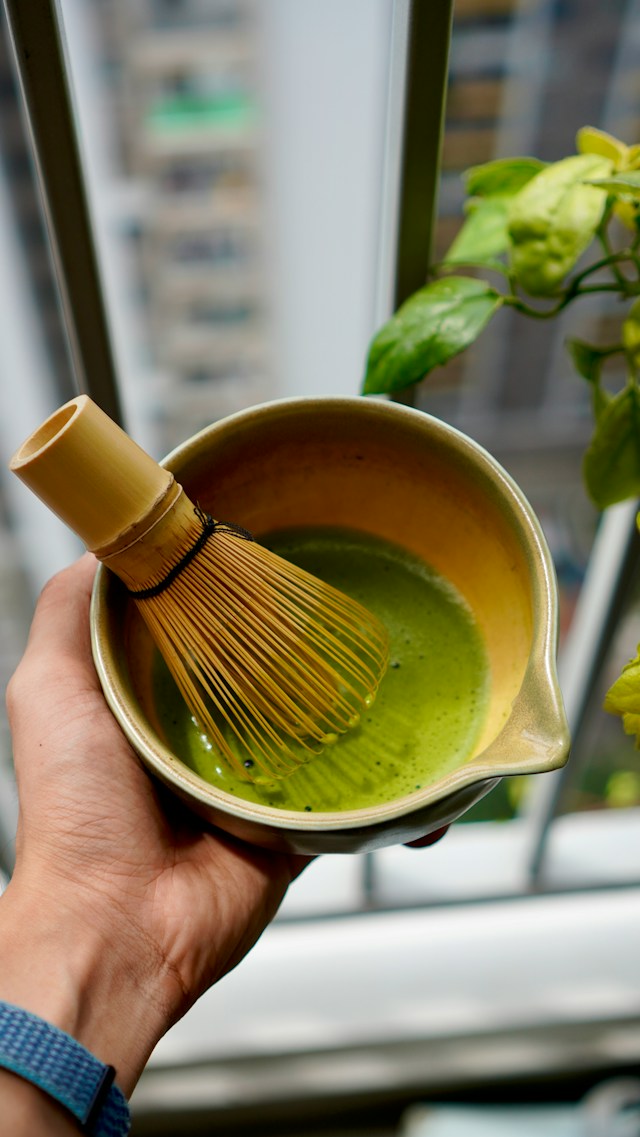
You do not need much equipment. A small bowl, a fine sieve and a whisk are the basics. Traditional bamboo whisks, called chasen, create a smooth, frothy texture. A small electric frother works well too and is a convenient option for busy mornings.
Sifting matcha before mixing prevents clumps, which are the most common complaint among home matcha makers. A small tea strainer over the cup does the job perfectly.
How to Make a Matcha Latte
Sift about a teaspoon of matcha into a bowl or cup. Add a small amount of hot water, around seventy to eighty degrees rather than boiling, as boiling water can make matcha taste bitter. Whisk vigorously in a zigzag motion until smooth and slightly frothy.
Heat and froth your milk of choice, then pour it over the matcha. Sweeten to taste with honey, maple syrup or sugar if desired.
Iced Matcha
For an iced version, whisk matcha with a little water, then pour over ice and add cold milk. Layering milk first and pouring matcha on top creates the striking two-tone effect popular on social media.
Choosing Milk
Matcha pairs beautifully with many milks. Full cream dairy milk creates a rich, creamy latte. Oat milk is a popular choice for its natural sweetness and smooth texture. Almond, soy and coconut milks each bring their own character. Experiment to find your favourite.
Matcha in the Kitchen
Matcha is not limited to drinks. It adds colour and flavour to cakes, cookies, pancakes, ice cream, smoothies, overnight oats and even savoury dishes. Matcha and white chocolate is a classic combination. Start with small amounts, as matcha’s flavour can quickly become dominant.
Caffeine Content
Matcha contains caffeine, though typically less than a standard espresso-based coffee per serve, depending on how much powder is used. It also contains L-theanine, an amino acid that many people say gives a calmer, more sustained alertness than coffee. Individual responses vary.
Storing Matcha
Matcha is sensitive to light, heat, air and moisture, which can dull its colour and flavour. Store it in an airtight container in a cool, dark place. Some people refrigerate opened matcha, but ensure it is well sealed to prevent moisture absorption. Use it within a few months of opening for the best flavour.
Troubleshooting
If your matcha tastes bitter, try cooler water or less powder. If it is clumpy, sift it first and add water gradually. If the colour looks dull or brownish, the matcha may be old or of lower quality.
Sweetening Thoughtfully
Many café matcha drinks are sweeter than people realise. At home, you control the sweetness, so start with a small amount and adjust gradually. Vanilla, a pinch of cinnamon or a drizzle of honey complement matcha’s grassy notes, while strawberry purée layered under an iced matcha has become a popular café combination worth trying.
Making It a Ritual
For many people, preparing matcha becomes a calming ritual. The slow sifting, whisking and pouring offers a moment of mindfulness before a busy day. It is a small pleasure that turns an ordinary morning into something special.
A Green Habit Worth Keeping
Making matcha at home is simple, affordable and rewarding. With quality powder, a few basic tools and a little practice, you can enjoy café-quality lattes, refreshing iced drinks and creative baking whenever the craving strikes, all from your own kitchen.



