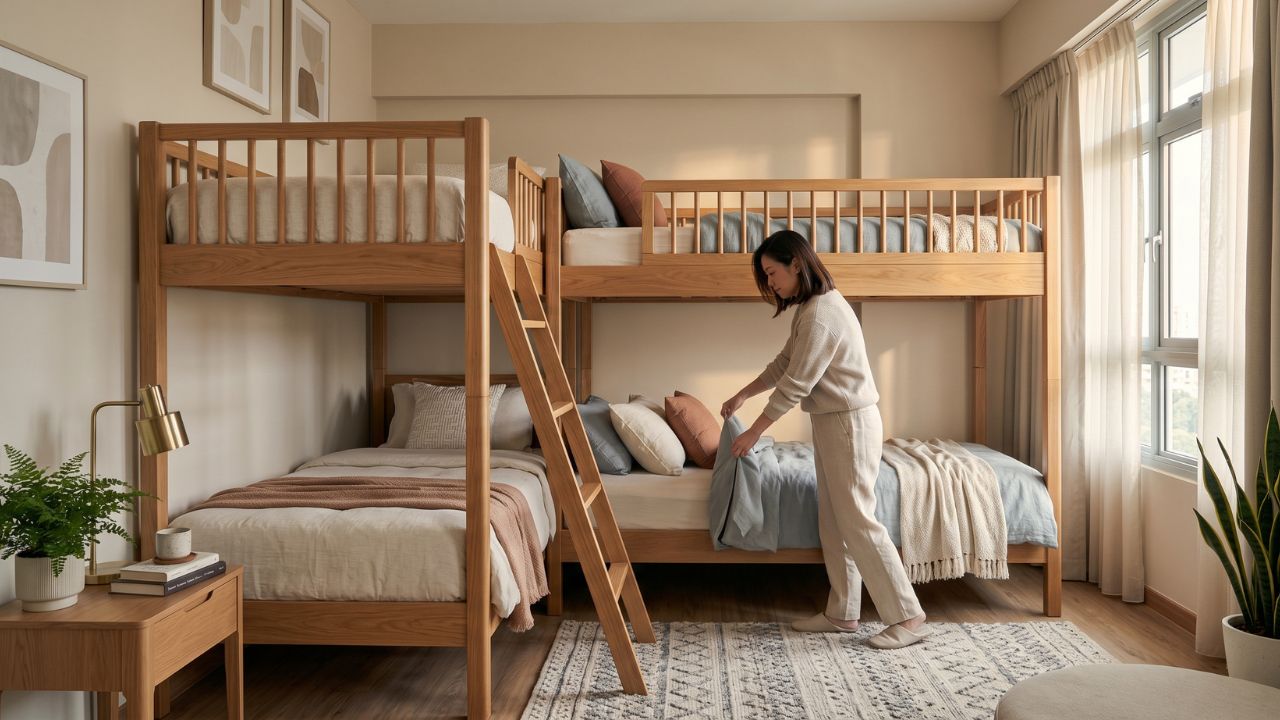
Creating a comfortable bedroom for children or multiple family members can be challenging when space is limited. Beds take up a significant amount of floor space, leaving less room for storage, play and other everyday activities. Bunk beds offer a practical solution by placing one bed above another, helping households make better use of the available space.
Available in different sizes, materials and designs, they can suit children’s bedrooms, shared rooms and occasional guest accommodation. Choosing the right option requires careful consideration of safety, comfort and the room’s layout.
Why Are Bunk Beds a Practical Choice?
One of the main advantages of bunk beds is their space-saving design. By arranging two sleeping spaces vertically, they free up floor space that would otherwise be occupied by separate beds.
This additional room can be used for a desk, storage units, toys or other bedroom essentials. For families with two children sharing a room, this arrangement can help create a more functional environment without overcrowding the space.
Bunk beds can also be useful in holiday homes and guest rooms where several people occasionally need somewhere to sleep. Some designs include additional storage or a trundle bed, offering even greater flexibility.
Measure Your Bedroom Carefully
Before choosing a bunk bed, measure the available floor space and the height of the ceiling. Although bunk beds reduce the amount of floor space required, they need sufficient vertical clearance to allow the person sleeping on the upper level to sit up comfortably.
Consider the position of windows, ceiling lights, fans and other fixtures. The bed should not obstruct doors, windows or access to essential parts of the room.
It is equally important to leave enough space around the furniture for safe movement. Check the dimensions of the assembled bed rather than relying solely on the mattress size.
Planning the layout in advance can help you avoid purchasing a bed that is too large for the room.
Choose a Suitable Design and Material
Bunk beds are available in a variety of designs to suit different bedroom styles.
Wooden models can create a warm, traditional appearance and may complement other wooden furniture. Metal designs often feature a simpler, contemporary look and can be suitable for modern interiors.
Some models use neutral colours that fit easily into existing décor, while others feature playful designs intended for children’s rooms.
When choosing a style, consider both appearance and practicality. A simple design may remain suitable as children grow, whereas themed furniture may appeal to younger children but become less appropriate over time.
You can explore different bunk beds to compare available styles and identify an option that suits your household.
Prioritise Safety Features
Safety should be a primary consideration when buying bunk beds, particularly when children will use them.
The upper bunk should have suitable guardrails to help prevent falls. The ladder should be securely attached and designed to provide safe access to the top bed. Check that the frame is stable and that all fixings are installed according to the manufacturer’s instructions.
Always follow the manufacturer’s age recommendations and weight limits. Children under six years old should not use the upper bunk, in line with widely recognised bunk-bed safety guidance.
Place the bed away from ceiling fans, light fittings and window hazards. Avoid attaching cords or other strangulation hazards to the bed, and keep the surrounding area clear.
Regularly inspect the frame, ladder, guardrails and fastenings to make sure everything remains secure.
Select Comfortable Mattresses
The mattress plays an important role in ensuring a comfortable night’s sleep. Before purchasing one, check the mattress dimensions and the maximum permitted thickness specified by the bunk-bed manufacturer.
An excessively thick mattress can reduce the effective height of the upper bunk’s guardrails, potentially increasing the risk of falling. The mattress should fit the frame correctly without leaving unsafe gaps around the edges.
Consider the sleeper’s age, comfort preferences and support requirements when selecting a mattress. Breathable bedding and appropriate mattress care can also help maintain a comfortable sleeping environment.
Consider Storage and Additional Features
Some bunk beds include drawers, shelves or built-in storage compartments. These features can be particularly helpful in smaller bedrooms where space for separate furniture is limited.
Under-bed drawers may provide room for clothing, toys or spare bedding, while integrated shelving can keep books and everyday items organised.
Other designs offer a single upper bunk with a desk or storage area underneath. These configurations can be useful for older children who need a study area in their bedroom.
Before choosing a model with additional features, consider whether they genuinely meet your needs and whether they leave enough space for comfortable movement.
Keep the Bedroom Organised
Once the bunk bed is installed, arrange the rest of the room to maintain a practical layout. Position frequently used items within easy reach and avoid placing unnecessary furniture around the ladder.
Storage boxes, shelves and wardrobes can help keep clothing and personal belongings organised. In shared bedrooms, assigning separate storage areas to each person can also reduce clutter and make daily routines easier.
A tidy arrangement improves the room’s appearance while helping everyone use the available space more efficiently.
Frequently Asked Questions
Are bunk beds suitable for small bedrooms?
Yes. Their vertical design allows two sleeping spaces to occupy the floor area of approximately one bed, leaving more room for other furniture and activities.
What age is suitable for the upper bunk?
Children under six years old should not use the upper bunk. Always follow the manufacturer’s age guidance and safety instructions.
What should I check before buying bunk beds?
Check the bed’s dimensions, ceiling clearance, frame stability, guardrails, ladder, mattress requirements and weight limits. Make sure the design suits the people who will use it.
Conclusion
Bunk beds provide a practical way to create additional sleeping space without filling a bedroom with furniture. By measuring the room, choosing a suitable design and prioritising safety, you can find an option that meets your household’s needs. With appropriate mattresses, secure construction and thoughtful organisation, bunk beds can help create a comfortable and functional shared bedroom.