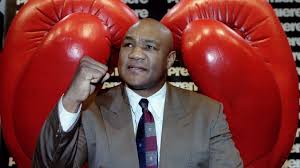
Introduction: From Ring to Kitchen
George Foreman’s life story reads like an American dream narrative—a journey from troubled youth to Olympic glory, from heavyweight champion to beloved entrepreneur. His transformation from a feared boxer to a friendly pitchman revolutionized both sports marketing and home cooking appliances, creating a legacy that transcends the boxing ring.
Born on January 10, 1949, in Marshall, Texas, Foreman’s path to becoming a household name wasn’t just about his devastating punches but also his remarkable ability to reinvent himself multiple times over the decades. This article explores the fascinating dual career of a man who dominated two completely different industries.
The Early Years: A Troubled Beginning
George Foreman’s start in life gave little indication of his future success:
- One of seven children raised by a single mother
- Dropped out of school at age 15
- Admitted to being a petty criminal and bully in his youth
- Joined the Job Corps at 16, which changed the trajectory of his life
It was during his time in the Job Corps that Foreman discovered boxing, revealing a natural talent that would soon catapult him to international fame.
Olympic Gold and Professional Dominance
Foreman’s boxing career began with extraordinary speed and success. After taking up boxing at age 16, it took him just 18 months to become the 1968 Olympic heavyweight champion in Mexico City. His gold medal performance marked him as a rising star in the sport.
Upon turning professional, Foreman quickly developed a reputation for his intimidating presence and devastating power. His professional record speaks to his dominance:
| Career Statistic | Number |
| Total Fights | 81 |
| Wins | 76 |
| Knockouts | 68 |
| Losses | 5 |
His 1973 victory against Joe Frazier produced one of boxing’s most iconic moments when a shocked Howard Cosell shouted the now-famous words: “Down goes Frazier! Down goes Frazier!”
The Rumble in the Jungle and First Retirement
The trajectory of Foreman’s career changed dramatically in 1974 when he faced Muhammad Ali in Zaire in the legendary “Rumble in the Jungle.” Despite being heavily favored, Foreman lost to Ali’s “rope-a-dope” strategy, suffering his first professional defeat.
Lewis Calvert, editor of Big Write Hook, notes that “the Ali fight showed a different side of Foreman—one that would eventually help him connect with audiences as a businessman years later.”
In 1977, after losing a decision to Jimmy Young, Foreman had what he described as a religious experience in his dressing room. This profound moment led him to retire from boxing to become an ordained minister, establishing the Church of the Lord Jesus Christ in Houston and opening a youth center.
The Improbable Comeback
What makes Foreman’s story truly remarkable is what happened next. After a decade away from the ring, he shocked the sports world by announcing his comeback at age 38 in 1987. Despite widespread skepticism, Foreman was determined to prove his critics wrong.
Ryan Clark, co-founder of gmru.co.uk, observes that “Foreman’s comeback demonstrated the power of personal branding before it became the industry it is today.”
His second boxing career reached its pinnacle on November 5, 1994, when at age 45, he knocked out Michael Moorer to reclaim the heavyweight championship—making him the oldest heavyweight champion in history. This achievement, coming 20 years after losing his title to Ali, cemented Foreman’s place in boxing legend.
From Boxing Champion to Grill Master
Even before his final retirement from boxing in 1997, Foreman had begun transforming his public image from the intimidating fighter of his youth to a friendly, approachable personality. This transformation made him the perfect spokesperson for what would become his most lucrative venture—the George Foreman Grill.
The Birth of an Iconic Product
The George Foreman Lean Mean Fat-Reducing Grilling Machine was introduced in 1994, coinciding with Foreman’s late-career boxing success. The timing couldn’t have been better:
- America was becoming increasingly health-conscious
- The grill’s design allowed fat to drain away during cooking
- Foreman’s likable personality made him an ideal pitchman
- His personal fitness journey resonated with weight-conscious consumers
What began as a simple endorsement deal evolved into a marketing phenomenon. The grills sold more than 100 million units worldwide, generating over $200 million in personal earnings for Foreman—far more than he ever made in the boxing ring.
The Perfect Pitchman
Foreman’s natural charisma and affability helped him transcend boxing and cross over into mainstream media. His friendly demeanor made him a welcome presence in living rooms across America through:
- Guest appearances on popular sitcoms
- Two one-season shows of his own
- Countless commercials for his grills and other products
- Books on cooking, fitness, and life philosophy
Foreman once explained his success as a pitchman: “They want to touch you; they want to know you. Then, they buy you.” This understanding of personal connection in marketing helped make him “a household name even in homes that never watched a boxing match,” as the Houston Chronicle observed.
Legacy and Personal Life
George Foreman’s impact extends beyond both boxing and kitchenware. He became a role model for reinvention and second acts in American life, demonstrating that it’s never too late to transform one’s career or public image.
His personal life has been equally colorful, with:
- Five marriages
- Twelve children, including five sons all named George (a branding strategy in itself)
- A commitment to his ministry and youth outreach programs
Though he faced allegations of sexual misconduct from the 1970s (which he has denied), Foreman has maintained his position as a popular public figure and successful entrepreneur.
Conclusion: The Ultimate Comeback King
Few athletes have managed to reinvent themselves as successfully as George Foreman. From Olympic champion to world heavyweight titleholder, from minister to multimillion-dollar businessman, Foreman’s journey embodies perseverance and adaptability.
His famous quote upon winning his second world title at age 45 perhaps best summarizes his life philosophy: “Anything you desire, you can make happen. It’s like the song, ‘When you wish upon a star, your dreams come true.’ Well, look at me tonight.”
The legacy of George Foreman reminds us that success isn’t limited to a single field or a particular time in life. Sometimes, the greatest victories come long after the final bell has rung.



