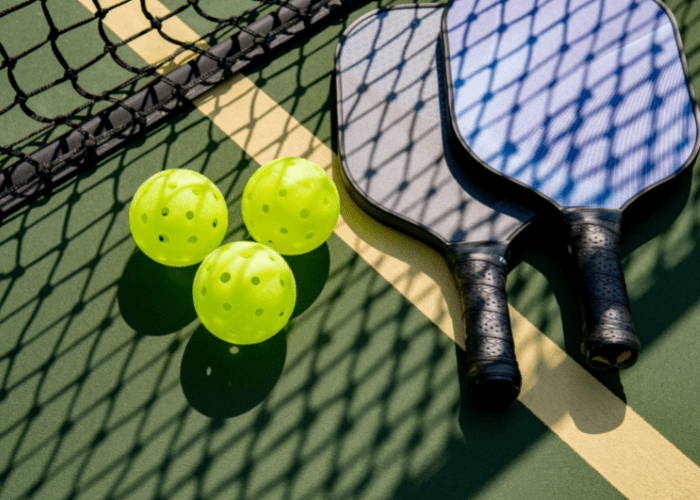
Your paddle isn’t just a piece of gear. It’s an extension of your strategy. A poorly chosen paddle can sabotage your shot accuracy, drain your control, and leave you scrambling to keep up with your opponent. Paddle design impacts everything on the court—from your ability to return fast shots with precision to how your hands adjust mid-rally. Advanced players don’t settle for one-size-fits-all solutions because they know their paddle needs to complement their technique. Thoughtful equipment selection isn’t optional here; it’s the difference between dominating and barely holding your ground.
Grip Dimensions: Comfort Meets Precision
Your grip matters more than you think. Handle length and circumference directly shape wrist mobility and shot precision. A shorter grip can increase control, while a thicker handle may reduce wrist fatigue but decrease finesse. For the best fit, test grip sizes at a club or pro shop. Pick a paddle that feels like an extension of your natural hand position. Here’s the shortcut: if you can’t hold it comfortably for ten minutes without adjusting, it’s the wrong grip size.
Core Materials: Power, Touch, or Middle Ground?
Core material is a game changer. A polymer core? That’s your all-purpose option, great for balanced touch and power. Nomex? Unforgiving and loud, yes—but it translates raw energy into explosive drives. Aluminum? Lightweight control, but slightly weaker pop. Each core has its pros and cons, so the right choice depends entirely on how you strike. Heavy on finesse? Polymer or aluminum will amplify your touch. Prefer to smash your opponent into submission? Nomex will give you that bite you need. Don’t buy blind here—the wrong core means the wrong feel, and that’s a step backward.
Weight Distribution: Finding Your Sweet Spot
Weight says everything about your paddle. Balanced paddles are the jack-of-all-trades, perfect for players in an offensive and defensive rhythm. Head-heavy models give extra juice to smash points but slow down hand speed. Handle-heavy paddles bring stability for touch shots, ideal for net skirmishes. Your swing changes with weight placement. A head-heavy setup might dominate baseline rallies, while a lighter balance enhances your reflexes at the kitchen. Be deliberate. The myth is that one “perfect” paddle weight exists; the truth is it depends on how you play.
Surface Texture and Spin Capabilities
Spin isn’t just about skill; it’s about surface. Rough textures grip the ball, adding wicked topspin or slicing undercut drop shots. Smooth paddles? Streamlined, yes, but less spin-heavy. If spin is central to your game, maintain that textured face like your life depends on it. Dirt, wear, or neglect will dull its edge and cost you control over your game’s subtleties.
Matching Paddle Specs to Skill Level
Your paddle should evolve with your game. Beginners? Focus on comfort and stability so that you can hone the fundamentals. Intermediates? Upgrade to a balanced paddle that lets you swing between speed and control. Advanced players? Dive into specializations—whether it’s maximizing spin with textured faces or pushing raw power through a Nomex core. Players seeking an equipment upgrade can explore a range of pickleball paddles to suit every style and skill level. Ignore your skill level at your own peril; an overly complicated setup can spoil your shot mechanics before they’ve even solidified.
Care and Upkeep: Extending Paddle Lifespan
You’ve invested in the right gear. Now take care of it. Clean the paddle face after each session to remove dirt and preserve texture. Swap out grips as soon as they show wear—fraying affects control. Store your paddle in a cool, dry spot, away from heat or moisture, which can warp materials. Basic upkeep ensures consistency in your game. Neglect it, and you’re throwing good money down the drain.
Avoiding Costly Paddle Missteps
Don’t fall for the trap of snagging the priciest paddle, assuming it’s “the best.” Don’t skip demo stations; they’re your fastest route to the right fit. Another mistake? Rushing a purchase based on hype instead of performance compatibility. Quick fix: Borrow paddles from other players at your club, or sign up for local clinics that specialize in testing gear. Make smart decisions, not emotional ones.
Elevate Your Play: Putting It All Together
Your paddle should align with your strategy—not the other way around. Grip dimensions, core material, weight, texture—it all counts. Reassess your current gear. Compare it against this checklist, and make the informed upgrade that finally matches your play style. The right paddle doesn’t just elevate your game; it reshapes it. Now go make your move.



