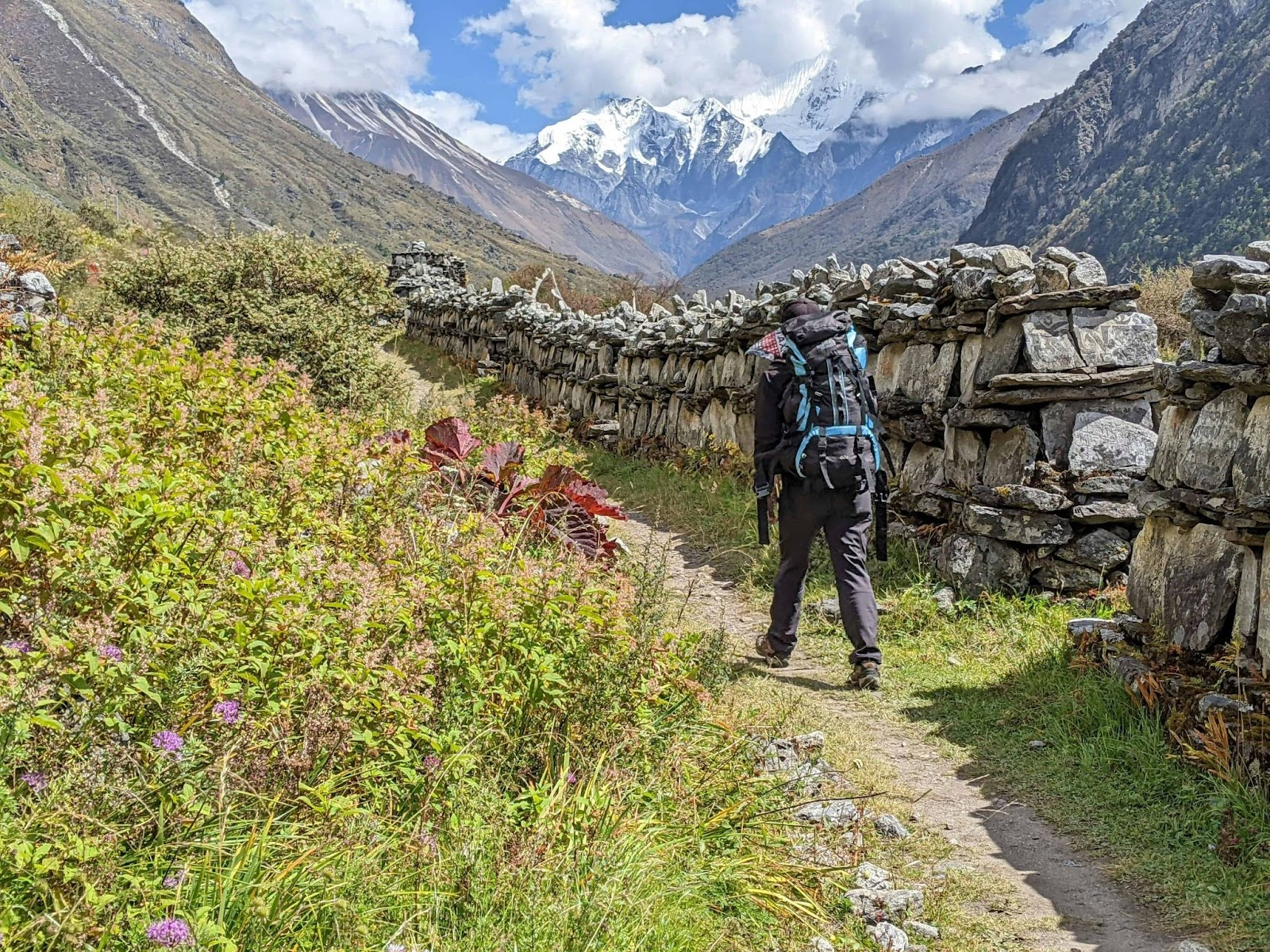
Picture yourself getting off a dusty bus after seven hours on mountain roads. Your legs feel stiff. Your back hurts. But then you look up.
Snow peaks cut through blue skies. Prayer flags wave in fresh mountain air. Welcome to Syabrubesi.
This is your gateway to Langtang Valley Trek. It’s Nepal’s easiest high-mountain adventure to reach.
Distance Makes All Change
Most trekkers think about Everest Base Camp. Or they think about Annapurna Circuit. But smart adventurers know being close beats being famous.
Langtang sits just 137 kilometers north of Kathmandu Valley. You’ll reach the starting point in eight hours by road. No costly flights. No weather delays. No booking problems.
Think about Everest region travel plans. Lukla flights cost $180 each way. Weather stops hundreds daily. Busy season bookings fill months ahead.
Langtang trekking cuts out these problems. Your adventure starts when you want. Where you want.
Natural Beauty Opens Up
Langtang National Park keeps 1,710 square kilometers of clean wilderness safe. Red flower forests burst with bright blooms each spring.
Old oak trees share secrets through moss-covered branches. Bamboo groups rustle with hidden animal movements.
Walk higher and warm-weather plants give way to mountain meadows. Wild flowers cover valley floors during rain season.
Yaks eat grass peacefully. Icy streams sing their endless songs. Langtang Lirung peak rules horizons at 7,234 meters. Its triangle top shines white against dark blue skies.
Culture Experience Waits
Tamang communities have called Langtang Valley home for hundreds of years. These mountain people share Tibetan Buddhist history.
You see this in every carved window. Every spinning prayer wheel. Every monastery yard. Village building shows harsh weather facts. Thick stone walls. Flat roofs. Small windows save precious warmth.
Kyanjin Gompa monastery sits at 3,870 meters high. Monks welcome visitors with butter tea events. They explain Buddhist ideas.
They share stories passed down through generations. Local cheese makers produce yak milk treats. You’ll find these nowhere else on earth. Each bite connects you straight to nomadic herding ways.
Why Langtang Wins Against Others
Helambu Circuit gives easier ground. But it lacks big mountain views. Gosaikunda Trek provides holy lake experiences.
Yet it needs combining with Langtang for full adventure. Chisapani Nagarkot appeals to beginners. But it gives limited wilderness diving.
Langtang Valley gives full package. Easy access. Mountain scenery. Culture depth. Wildlife meetings. Spiritual experiences.
Trek time spans 7-12 days. This depends on chosen route additions. Perfect length allows proper height adjustment. It won’t use up vacation time.
Perfect Time Windows
Spring months change valleys into plant wonderlands. Red flower blooms paint hillsides red, pink, white. This happens from March through May.
Clear weather gives excellent mountain seeing. Fall brings crystal-clear skies. This runs from October through December. Steady weather patterns cut down rain risks.
Winter trekking stays possible at lower heights. Fewer crowds mean real culture interactions. Local families have more time for talks. They do cooking shows. They share story sessions around wood-burning stoves.
Real Considerations Matter
Teahouse places provide comfortable staying throughout trekking route. Basic rooms include beds. They include blankets.
They include shared eating areas. Meals feature local favorites. Dal bhat. Momos. Tibetan bread. Yak cheese soup. Communication networks reach most villages through mobile towers.
Medical places operate in Dhunche town for emergency situations. Helicopter rescue stays available from major villages.
Trail marking stays clear throughout main routes. Guide services enhance culture understanding. But they aren’t required for experienced hikers.
Earth Care
Langtang National Park conservation programs protect at-risk species. Red pandas roam bamboo forests. Himalayan black bears search in oak woodlands. Snow leopards patrol high-altitude hunting grounds above tree line.
Trekking permits fund conservation efforts straight away. Your visit supports ranger pay. Trail care. Wildlife research programs.
Community-based tourism ensures local families benefit. They benefit from responsible adventure travel.
Budget-Friendly Adventure
Total trekking costs stay reasonable compared to popular alternatives. Permits cost $30 for SAARC nationals.
They cost $100 for others. Daily expenses average $25-35. This includes places to stay. Meals. Guides. No internal flight expenses blow up budgets without warning.
Equipment rental shops in Kathmandu provide quality gear at fair prices. Sleeping bags rent for $2-5 daily. Down jackets rent for $2-5 daily.
Trekking poles rent for $2-5 daily. Boots rent for $2-5 daily. Purchase options exist for items you want to keep.
Trek Challenge & Essential Packing
Langtang Valley rates medium challenge on world trekking scales. Daily hiking distances span 4-7 hours across different ground.
Maximum height reaches 5,000 meters at Tserko Ri viewpoint. Height sickness affects some trekkers above 3,500 meters. This makes slow climb crucial.
Physical prep should include heart training 6-8 weeks before leaving. Stair climbing builds needed stamina. Hiking with weighted backpack builds stamina.
Jogging builds stamina. Previous multi-day hiking experience helps. But it isn’t required for determined beginners.
Complete Packing List:
Clothing Must-Haves:
- Moisture-moving underwear (3-4 pairs)
- Hiking pants (2 pairs – one lightweight, one warm)
- Base layer tops (2-3 merino wool or synthetic)
- Fleece jacket or down vest for warming
- Waterproof rain jacket with hood
- Warm beanie and sun hat
- Hiking socks (4-5 pairs wool blend)
- Liner gloves plus warm mittens
Footwear & Accessories:
- Waterproof hiking boots (broken in before leaving)
- Camp shoes (lightweight sandals or slip-ons)
- Gaiters for snow and debris protection
- Trekking poles (adjustable with snow baskets)
- Glacier sunglasses (UV 400 protection minimum)
- Headlamp plus backup flashlight
Sleep System:
- Four-season sleeping bag (-15°C rating)
- Sleeping pad (R-value 4+ for warmth)
- Pillow or inflatable pillow case
- Bivy sack for emergency shelter
Technical Gear:
- Backpack 50-65 liters with rain cover
- Water bottles (2-3 liters total size)
- Water cleaning tablets or filter
- Multi-tool with knife and scissors
- Rope (30 feet paracord minimum)
- Duct tape wrapped around trekking poles
Medical & Safety:
- First aid kit with bandages, antiseptic
- Height sickness medication (Diamox)
- Pain relievers and anti-swelling drugs
- Personal prescription medications
- Sunscreen SPF 50+ and lip balm
- Hand sanitizer and wet wipes
Electronics & Documentation:
- Camera with extra batteries and memory cards
- Portable phone charger or power bank
- Passport and trekking permits (waterproof storage)
- Emergency contact information
- Maps and guidebook (physical backup)
- Whistle for emergency signaling
Final Decision
Langtang Valley trekking combines everything serious mountain adventurers seek. Stunning scenery rivals world-famous destinations.
Rich culture experiences beat touristy alternatives. Easy access cuts out travel nightmares. Reasonable costs keep adventures affordable.
Your Himalayan dreams don’t need Everest expeditions. They don’t need Annapurna crowds. Sometimes best adventures hide in plain sight.
They wait just outside capital city limits. Langtang Valley proves this truth with every step you take. Through clean mountain wilderness.
Pack your boots. Charge your camera. Prepare for Nepal’s best-kept secret. Your adventure begins where others end their planning.
At easy paradise called Langtang Valley.



