In a world where many children spend more and more time indoors, it has never been more important to introduce meaningful, engaging outdoor activities. Spending time in nature and breathing in fresh air is not just a way of killing time, but it also promotes physical growth, social and emotional maturity and health. Studies indicate that outdoor learning and play offer numerous advantages to the youth. In this paper we discuss ten outdoor activities and how they can be integrated into normal routines in order to provide children with vibrant and healthy experiences.
Nature Walks and Scavenger Hunts.
A nature walk introduces children to what is in the nature that surrounds them: parks, woodlands, riversides or even local green spaces. It can be made into a scavenger hunt – such as finding leaves of various shapes, stones, insects or bird calls. Such an outdoor activity among children develops a sense of observation, interest and appreciation of the surroundings. It has been proven that nature-based learning improves the knowledge of children in the environment they live in and promotes wellbeing. Ask children to make observations, inquire and analyse their observations.
Climbing, Balancing and Obstacle Trails.
Active Outdoor Activities For Children, such as climbing and balancing over logs or through obstacle trails, are a critical type of outdoor activity. The UK government recommends that outdoor play can enhance bone density, coordination and agility. Installing a safe trail in your garden, yard or nearby park can also enable children to push physical boundaries and this also enhances confidence.
Group Games and Collaborative Problems.
Group or team play- e.g. Relay races, capture the flag or cooperative building games is a great chance to socialise. Children’s outdoor activities that require working as a team help them to improve communication, leadership, empathy and mutual respect. The studies highlight social and emotional advantages of outdoor play. Think of challenges where the children have to collaborate in order to accomplish something, e.g., construct a den, carry water between A and B, and not spill, or find their way through a map.
Water Play and Exploration
Outdoor water-based activities with children- these activities can include paddling, dipping in a pond, walking along a stream or even just water-balloon games. Such experiences provoke sensorial and cognitive growth: children experiment with buoyancy, with the flow of water, with temperature, with textures and tend to pose scientific questions. Such activities are sensory-rich and aid cognitive development as summarised reports on research on outdoor learning say. Safety: The main priority is that the proper supervision, water depths, and clothes are used depending on weather conditions.
Gardening, Planting and Outdoor Science.
Planting or gardening itself is a nurturing outdoor activity that involves nature, science, responsibility and creativity that should be incorporated in the calendar of children. The children are taught about plant life cycles, soil, insects, weather and ecosystems. Studies indicate that children who take part in outdoor learning in natural environments report high confidence and better academic performance. You could either use a piece of ground or containers in case there is insufficient space.
Outdoor Storytelling and Art.
There is much to be inspired by in the outdoors, and this is the area of chalk-drawing on the sidewalk, leaf-rubbings, sculptures in nature, and storytelling in the shade of a tree. These imaginative outdoor games with children are useful in order to stimulate imagination, language and emotional expression. Provide clues, such as what this leaf would say if it could talk? Or “Suppose you are a bird in that tree, what can you see? The difference in the sensory input outdoors provides attention, concentration and innovation.
Discovery of Seasonal and Weather-Based Activities.
The nature of outdoor activities among children is that with every activity, the environment is going to be different: it may be a change in season, and weather. Take advantage of this: in case of snow or frost, you may go ice-skating or sledging (where there is no danger of accidents), so that in the fall you can collect leaves or go on nature-hikes, and in the spring you can go on flower-hunts, and in the summer you have more daylight. Promoting the experience of weather and seasonal variations among children develops flexibility and the value of the natural environment. The study emphasises that outdoor time in all the seasons is associated with wellbeing and a sense of being in touch with nature.
Orienteering, Map Reading and Treasure Hunts.
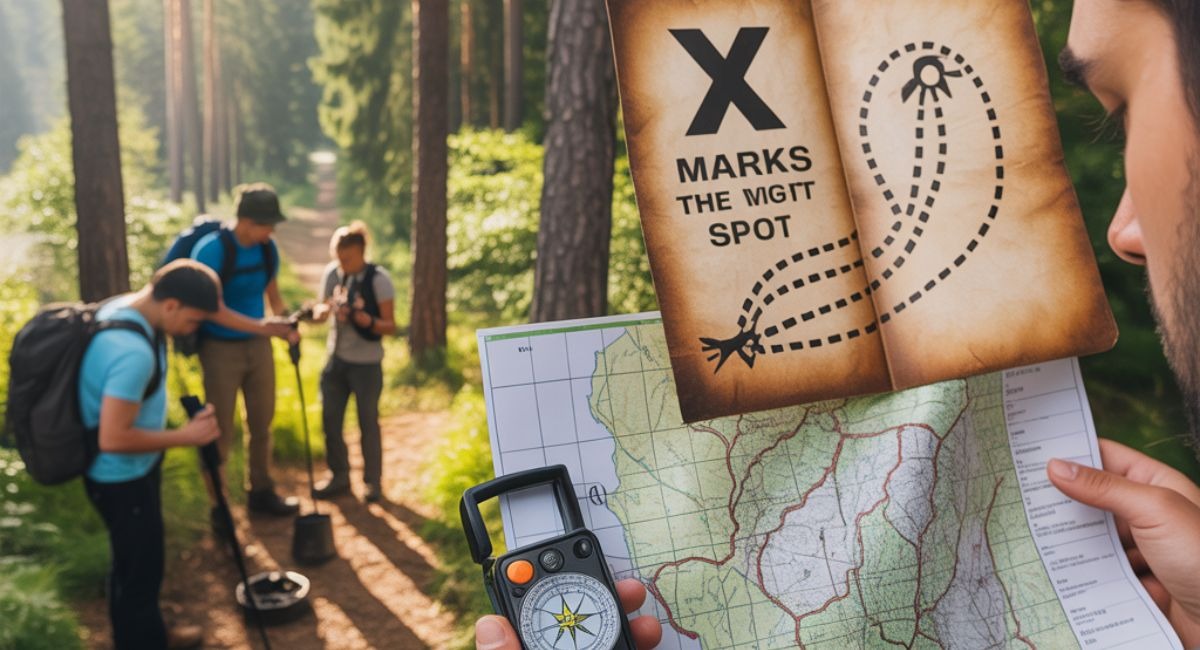
Taking children orienteering or on a treasure hunt and using maps and clues is an amazing outdoor activity involving children that is fun and requires them to solve problems and move around. These types of activities evoke cognitive functions of spatial awareness, direction-finding, logic and planning. The research on outdoor learning has revealed that children who are involved in outdoor activities tend to have better problem-solving and critical thinking. You require a mere map, certain landmarks, and maybe buried treasures or clues.
Wildlife Viewing, Bird-watching and studies in the ecosystem.
A visit to a wildlife park, involving watching birds, insects, plants, and even puddle life is a good outdoor activity that children should be encouraged to do. It creates an interest in biological processes; it develops a sense of sympathy towards nature and cultivates skills in observation. Connection to the environment is encouraged, which assists children in gaining more insights into the environment and a willingness to conserve it. Give simple supplies to the children: binoculars, magnifying glasses, and a nature notebook. Ask them to write what they see, hear or sense.
Family Hikes, Cycle Rides and Adventures.
Lastly, another of the most well-off outdoor activities to consider when involving children is more of an expansive endeavour: family walks, bicycle trips or trips to the nearby nature park or mountainous areas. The extended activities of this nature develop stamina, strength, bonding of families and a feeling of accomplishment. The wider environment of outdoor activities is favourable to physical health, psychological well-being as well as a feeling of belongingness to nature. Plan ahead: take a safe path, bring necessary things, have some rest points and reflection after the activity.
Summary and Recommendations.
The rewards of adding outdoor activities to your children’s lives and your weekly agenda are bountiful in terms of physical health, mental and social growth, and educational preparedness. The testimony is obvious: Outdoor Activities For Children and education allow children to move, explore, experiment and interact with the surrounding world.
Practical tips to implement:
- Organise at least one outdoor meeting each week—consistency is key.
- Switch tasks and ensure that the novelty is high and the motivation is maintained.
- Make sure you have safety considerations: your supervision and clothing should fit the weather.
- Consider with children subsequently: what do the children think they have learned, felt, or would next time?
- Organise play (such as treasure hunts) and make it unstructured free play—it is all good.
Through this conscious effort to be outdoors, you give children much more than simply entertainment: you give them possibilities to mature, to be strong and to be happy. Allow them to learn the miracle that is only outside the door.