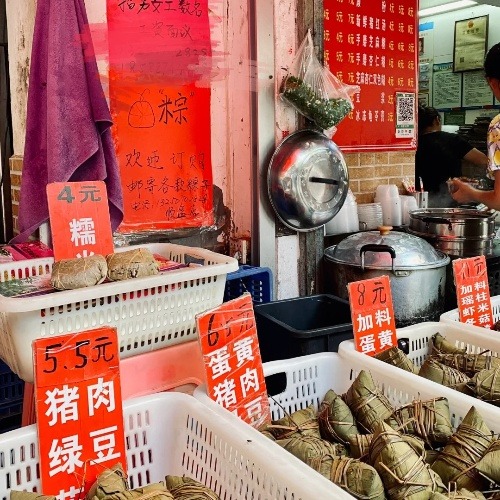
The night market scene in Guangzhou’s sprawling underbelly extends across various nooks and crannies of the city — from dark alleyways to modern streets — all with their own rhythm. One of the most photogenic stretches lies between Wuzhou Street and Huanhe South Road, where neon buzzes above sizzling food stalls and families browse toy shops and snack carts late into the night. You’ll find chewy squid brushed with satay sauce, crispy fried pork fillets, and old-school jelly fig ice served with tapioca pearls. The gossip and flavors make this short 150‑meter segment feel like a full‑blown theater of life.
Nearby, areas like Longshan Temple and the Bopiliao area attract locals and visitors on weekends for an easy loop of exploring, eating, and people-watching.
Looking for street food and local night vibes in Guangzhou? Read the complete Guangzhou night market guide.
Beijing Road Night Market
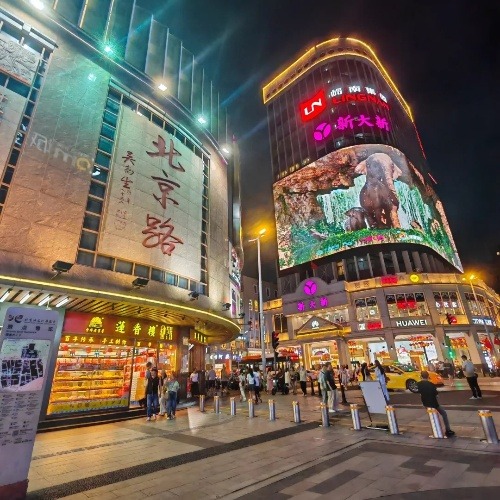
Beijing Road is the intersection of history and nightlife. You can literally walk over a protected, glass-sealed Song‑dynasty road while neon signs blaze overhead. Locals line up for rice noodle rolls at Chen Ji Cheung Fun and almond tofu pudding at Tong Yi Dessert House. Between bites, roam stands selling calligraphy sets, painted fans, and jade jewelry — trinkets of Guangzhou’s complex identity. And when night deepens, red lanterns glow, and street musicians warm the air with a mood that is both carnival and heritage.
Average cost: ¥30–50 per person
Transport: Metro Line 6 – Beijing Road Station
Xiguan Area Night Stalls
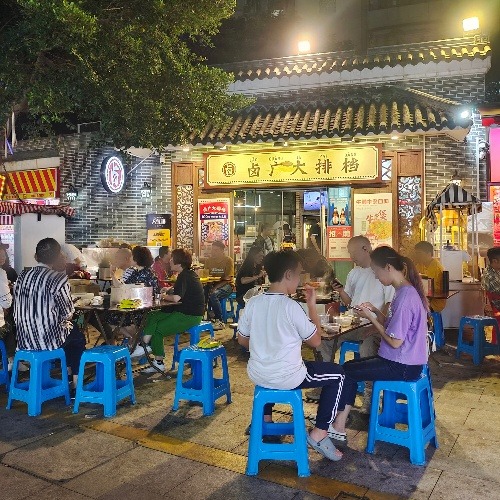
In Xiguan, the pace slackens, and the accent grows thicker. This is where Guangzhou’s past continues to buzz quietly beneath the lanterns. Locals queue for Ah Ming’s claypot beef offal and Mei Xin’s mung bean cakes; antique‑style porcelain and tea sets fill the wooden stalls. It’s about real experiences, not grand spectacle. Photographers love capturing the carved balconies of Xiguan mansions lit by warm lights, while families sip tea on the sidewalk. Is the old Guangzhou still there? Here it is — living and breathing.
Average cost: ¥30–40 per person
Transport: Metro Line 1 – Chen Clan Academy Station
Xiaogang Night Market
The market is the heart of Haizhu’s local nights — crowded, warm, and deeply familiar. Prices remain friendly to neighborhood families, and the smoky stalls glow under yellow bulbs as uncles trade jokes with vendors. It’s not fancy, but this is real life in Guangzhou, and each skewer or bubble tea feels like a piece of home.
Nestled in Haizhu District, Xiaogang is the post‑work playground of the city. The scent of oyster grills drifts from Uncle Wei’s stall in a narrow alley, while Ah Q’s Seafood fries squid that locals swear is the best. You’ll find stalls selling socks, phone cases, and streetwear — everyday items at everyday prices. Haggling is part of the fun here; laughter and chatter set the rhythm of the night.
Average cost: ¥20–30 per person
Transport: Metro Line 8 – Shayuan Station
Tonghe Night Market

In Baiyun District, every night Tonghe feels like a neighborhood festival. Next to the sizzle of Lao Zhou’s BBQ skewers, sugarcane juice presses hum along while families browse stalls for household goods and clothes. A mix of food and practicality gives it a grounded charm — less touristy, more local life in action. The shots you take without even trying capture a quiet charm from walls painted with folk art and neon reflections.
Average cost: ¥25–40 per person
Transport: Metro Line 3 – Tonghe Station
Yongtai Night Market
For those living the true nocturnal life, Yongtai is the place to go. It stays alive long after midnight with Lao Huang’s spicy grilled intestines and Sweet House’s mango pudding. Locals pick up slippers or phone chargers while waiting for their late‑night snacks, and the smoky air under buzzing signs feels cinematic. Arrive late, leave later, and you’ll see Guangzhou at its most real — half asleep, half awake.
Average cost: ¥25–35 per person
Transport: Metro Line 3 – Yongtai Station, Exit B2
Zhicun Night Market
Zhicun hums with student energy and the scent of grilling skewers. The famous Lao Biao Stinky Tofu stall fills one corner, and Coco Fresh Milk Tea stays open late serving bubble tea to laughing groups. Between food carts, small shops sell anime pins, phone accessories, and tote bags. The market is a riot in the best sense — a collage of youth, neon, and good value.
Average cost: ¥30–50 per person
Transport: Metro Line 5 – Yuancun Station, Exit C
Yuzhu Night Market
Yuzhu glows softly — artisanal jewelry, art prints, and grilled oysters under fairy lights. It’s where Guangzhou gets creative. Stalls offer vibrant fruit teas at Colorful Cups, and sketch artists draw portraits on the sidewalk. It’s low‑key yet picturesque, perfect for a leisurely evening stroll and a few photogenic shots.
Average cost: ¥40–60 per person
Transport: Metro Line 5 – Yuzhu Station
Lilang Market (Xilang)
Lilang Market in Liwan District blends practicality with food culture. Locals stop by for Lao Wu’s Sweet Shop — known for syrup‑soaked tofu pudding — or steaming bowls of fish porridge from Guang Ji Congee. During the day, it functions like a community grocery with fruit and vegetable stalls, but at night, the lights switch on and dessert vendors fill the air with sweetness. The mix of produce and snacks makes it feel both homely and lively.
The vibe here is casual but deeply local; people shop for dinner ingredients, grab a dessert, and chat with neighbors. It’s the kind of market where you’ll see grandmothers carrying baskets next to teenagers filming TikToks. If you want to see the true balance between daily life and indulgence, Lilang captures it perfectly.
Average cost: ¥30–40 per person
Transport: Metro Line 1 – Xilang Station
Practical Tips: Master the Night Market Experience
In Guangzhou, most night markets start around 5–6 PM, with peak hours from 7–10 PM. Early evenings suit families or visitors who prefer fewer crowds, while late hours bring livelier scenes, stronger aromas, and longer queues. The Guangzhou Metro connects most major markets — exits often lead straight to main streets, though smaller stalls might require a short walk through alleys. Driving isn’t ideal due to limited parking, but Didi and taxis are reliable after the metro closes.
When it comes to payment and safety, Alipay and WeChat Pay work everywhere. Bring some small cash for older vendors, and remember that foreign cards usually don’t work. It’s safe overall, but busy lanes can attract pickpockets — keep valuables close and pick popular stalls for fresher food. Most vendors don’t speak much English, yet a smile or a simple “Nei go” (this one) works wonders. Use Youdao or Google Translate if needed, and you’ll quickly find that Guangzhou’s vendors are as friendly as their food is flavorful.
Ready to plan your own night crawl? Get more insights, latest prices, and updated hours in the guangzhou night markets guide.



