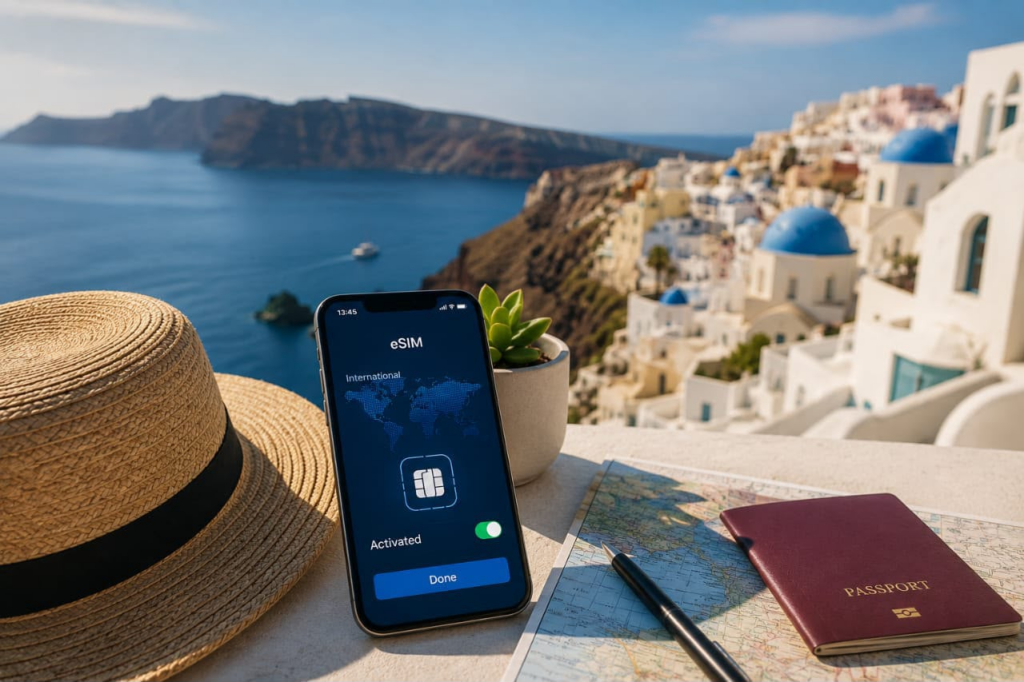
Europe is one of those destinations where a single trip can feel like several holidays rolled into one.
You might wake up in Paris, take a train through the French countryside, spend the next few days wandering through Switzerland, and finish the week eating pasta beside a quiet canal in Italy. The relatively short distances between many European destinations make multi-country travel wonderfully tempting.
They also make mobile connectivity something worth thinking about before you leave home.
Our phones have become part of almost every stage of a European adventure. We use them to find train platforms, translate restaurant menus, book museum tickets, call a ride, check into hotels, navigate medieval streets, and share photos with the people waiting back home.
Fortunately, staying connected in Europe does not have to mean constantly searching for Wi-Fi or changing SIM cards every time your itinerary crosses another border.
Think About Your Entire European Itinerary First
The best connectivity choice usually begins with the route rather than the phone plan.
There is a big difference between spending ten days entirely in Italy and taking a three-week trip through Portugal, Spain, France, Switzerland, and Germany.
If you are visiting only one destination, a country-specific plan may be all you need.
If your plans involve several countries, it makes more sense to look for connectivity that follows you across borders.
Before buying anything, write down every country on your itinerary, including short stopovers. Then check whether your chosen mobile plan covers all of them.
This sounds obvious, but it is surprisingly easy to focus on the main destination and forget that a connecting flight, overnight stop, or spontaneous side trip may take you somewhere else.
Travelers comparing different destinations and regional options can also browse Twise eSIM plans before departure rather than waiting until they arrive in Europe.
The goal is simple: your mobile connection should follow the trip rather than dictate it.
Why eSIM Is Particularly Useful For European Travel
A traditional physical SIM still works perfectly well in Europe, especially for long stays.
However, eSIM technology has made short-term and multi-country travel much easier for travelers with compatible phones.
An eSIM is a digital SIM profile installed directly on the device. Instead of removing your existing SIM card and replacing it with another small piece of plastic, you can add a travel connection digitally.
For European travelers, this offers several practical advantages.
You do not have to keep track of tiny SIM cards while moving between hotels.
You can often keep your normal SIM installed at the same time.
And most importantly, you can arrange your travel connectivity before you are standing in an unfamiliar airport wondering where the nearest mobile shop is.
The exact installation and activation process depends on the plan, so always follow the instructions provided by the eSIM provider.
Decide How Much Data You Really Need
It is easy to overestimate how much data a European holiday requires.
If your phone is mainly being used for Google Maps, WhatsApp, checking train times, restaurant searches, email, and occasional social media, your usage may be fairly moderate.
On the other hand, data disappears much more quickly when you start:
- streaming video;
- uploading large numbers of photos and videos;
- making frequent video calls;
- working remotely;
- using your phone as a hotspot; or
- streaming music for several hours every day.
Think about your normal habits rather than automatically choosing the biggest package.
Hotel Wi-Fi can handle larger downloads, cloud backups, and streaming in the evening, while mobile data can be reserved for exploring during the day.
It is also worth downloading entertainment before long train journeys or flights. Podcasts, music, books, and television episodes do not need to consume your travel data once they are stored on the device.
Crossing Borders Should Not Mean Starting Over
One of the joys of traveling through Europe is how easily one destination can lead to another.
A holiday originally planned around Paris might suddenly include Brussels. A few days in Milan could turn into a weekend beside Lake Como or a train ride into Switzerland.
That flexibility is part of the appeal.
Your connectivity should ideally allow for the same spontaneity.
For travelers moving between several European destinations, choosing a plan that already covers the relevant countries is far more convenient than arranging another SIM every time the itinerary changes.
Travelers looking for regional data plans or selected local-carrier-style options can compare a Europe local eSIM according to destination coverage, data allowance, validity, and the type of service they need. Twise’s Europe category currently includes regional travel eSIM options as well as different plan structures for European travel.
Always check the individual plan rather than assuming that every European eSIM covers exactly the same countries.
Remember That Data And Phone Service Are Different
This is one detail that can easily be missed.
Many travel eSIMs provide mobile data only.
For a typical holiday, that may be perfectly fine. WhatsApp, FaceTime, Messenger, Telegram, and similar applications can handle much of the communication travelers need.
However, there are situations where a traditional telephone number becomes useful.
Perhaps you need to call a small hotel that does not use WhatsApp. Maybe a restaurant reservation requires a local number. Business travelers may need conventional calls, and some services may rely on SMS.
If those features matter, check whether the specific plan includes voice calls, SMS, or a telephone number before purchasing.
Some European connectivity options sold through Twise include data-only service, while selected local-style products also offer calling or SMS functionality, depending on the product.
The word eSIM describes the digital SIM technology. It does not automatically tell you which mobile services are included.
Set Up The Important Things Before You Leave
The airport is rarely the ideal place to troubleshoot technology.
Before departure, check that your phone supports eSIM, confirm that it is unlocked where necessary, and read the installation instructions for your chosen plan.
If the provider allows installation before travel, do it while you have reliable Wi-Fi and plenty of time.
Also learn where the SIM settings are located on your phone.
On a dual-SIM device, you may need to decide which line handles:
- mobile data;
- voice calls;
- SMS;
- data roaming; and
- automatic cellular switching.
Keeping your regular SIM active can be useful, but make sure your phone is not quietly routing data through an expensive international roaming connection.
Five minutes spent checking these settings at home can save a lot of confusion later.
Download A Few Things For Offline Use
A good mobile connection is useful, but no traveler should depend on being online every second of the trip.
Europe contains everything from crowded capital cities to tiny coastal villages, mountain roads, islands, and rural countryside. Mobile reception can vary by location and network.
Before you leave Wi-Fi, save the things you would struggle without.
Download your hotel address, boarding passes, rail tickets, essential booking confirmations, and selected offline map areas.
If you are driving, save the route before setting out.
Take screenshots of important reservation details.
It is also helpful to keep eSIM installation or troubleshooting instructions somewhere that can be opened without internet access.
Offline preparation does not replace mobile connectivity. It simply means a temporary loss of signal does not become a travel emergency.
Use Public Wi-Fi Selectively
Europe’s hotels, airports, cafés, restaurants, and train stations often provide Wi-Fi, which can be extremely useful.
It can also help reduce mobile-data consumption.
Use Wi-Fi for downloading large files, updating apps, backing up photographs, or streaming entertainment when you are back at the hotel.
But avoid treating every network you see as automatically trustworthy.
Confirm the correct network name when possible, especially in airports, hotels, and busy tourist areas.
If you need to handle sensitive accounts or business information, follow appropriate security precautions rather than joining an unknown network simply because it is free.
One benefit of having your own mobile connection is being able to skip public Wi-Fi when you would rather not use it.
Keep Your Phone Powered Throughout The Day
Connectivity is only helpful while the phone has battery power.
European city breaks can be particularly demanding on phones. You may spend the day taking photographs, navigating streets, checking attraction times, scanning digital tickets, and searching for places to eat.
A compact power bank is one of the easiest travel accessories to justify carrying.
You can also extend battery life by lowering the screen brightness, downloading entertainment instead of continuously streaming it, and using low-power mode when appropriate.
For long sightseeing days, battery life and mobile data are really two sides of the same problem: both need to last until you are safely back at the hotel.
Let Your Phone Make The Journey Easier, Not Busier
One of the nicest things about traveling through Europe is discovering how different each destination feels.
Paris encourages long walks and café stops. Rome seems to reveal another piece of history around every corner. Barcelona pulls you between architecture, beaches, and late dinners. Smaller towns often reward travelers who put away the itinerary altogether and simply wander.
Technology should make those experiences easier without becoming the focus of the trip.
Use your phone when you need a map.
Check the train platform.
Translate the menu.
Book the table.
Message someone when plans change.
Then put it back in your pocket and look around.
Final Thoughts
Staying connected across Europe is mostly about planning ahead.
Check your itinerary, choose coverage that matches the countries you will actually visit, estimate your data needs realistically, and understand whether you require data only or traditional calls and SMS.
Prepare the phone before leaving home and keep essential information available offline as a backup.
Once those details are taken care of, connectivity becomes one less thing to think about while traveling.
And that leaves considerably more time for the things that brought you to Europe in the first place: beautiful cities, memorable meals, unexpected detours, and the freedom to discover somewhere new.



