Most people never think about how they sit, stand, or walk. They only notice when something starts to hurt. A stiff neck after a long day at a desk. A sore lower back after standing in the kitchen for an hour. A knee that clicks on the stairs. These signals often point to something bigger going on underneath. That something is a muscle imbalance.
A muscle imbalance happens when one muscle becomes stronger or tighter than the muscle it works against. The body relies on muscle pairs and teams. These muscles pull in opposite directions. This keeps joints stable and movement smooth. When one side of that pair gets weaker, shorter, or overworked, the balance shifts. The body then finds a way to keep moving anyway. It sometimes asks a different muscle or joint to do a job it never had to do before. This is called compensation. It is one of the most common reasons people end up with pain that seems to come from nowhere.
How Imbalances Build Up Over Time

Muscle imbalances rarely appear overnight. They build up slowly. This happens through habits repeated thousands of times a week. Sitting for long stretches shortens the muscles at the front of the hip. At the same time, it weakens the muscles in the backside and lower back. Looking down at a phone for hours pulls the head forward. It also tightens the muscles at the back of the neck. Some people carry a bag on the same shoulder every day. Others favour one leg when standing or always sleep on the same side. Each of these habits can quietly tip the balance in one direction.
None of these habits feels harmful in the moment. The problem is that the body adapts to whatever position or movement it repeats constantly. Muscles you use a lot grow stronger and shorter. Muscles that stay idle grow weak and stretched out. Over months and years, this pattern becomes the body’s new normal. That happens even though it was never the plan the body started with.
Why the Body Compensates Instead of Complaining

The body is good at finding a way to keep functioning. It does this even when something isn’t working properly. Suppose a muscle is too weak to do its job; a nearby muscle will step in. That muscle takes on a load it was never built to carry. This is compensation in action.
A common example is lower back pain caused by weak glute muscles. The muscles in the backside are meant to do a lot of the work during walking and standing. When they fall short, the lower back muscles pick up the slack. Over time, this extra demand builds up. It leads to tightness, fatigue, and eventually pain. That pain regularly shows up in a part of the body that was never the true source of the problem. This is why treating only the painful area gives short-term relief at best. The real cause is sitting somewhere else in the movement chain.
Shoulder and neck pain follow the same sequence. Weak muscles between the shoulder blades cannot hold the shoulders in place. Tight chest muscles also pull the shoulders forward. Together, these two problems force the neck muscles to work harder to hold the head up. The person feels the pain in their neck. But the root cause started with a posture that built up months or years earlier.
Spotting the Signs Early
A few common signs suggest a muscle imbalance may be developing. Pain that returns to the same spot again and again is one sign. Stiffness that eases with movement but returns quickly is another. Uneven wear on the soles of shoes is a third. So is one side of the body feeling noticeably tighter than the other. None of these signs seems dramatic on their own. Together, though, they frequently point towards a pattern worth watching.
Simple daily habits can help keep imbalances in check. Standing up and moving every 30 to 40 minutes breaks the norm of prolonged sitting. Try switching which shoulder you use to carry a bag. Alternate which leg bears weight when standing. Stretch tight muscle groups regularly. These small changes help keep the body’s muscle pairs closer to their natural balance. Strength workout matters just as much as stretching. Weaker, underused muscles, such as the glutes and the muscles between the shoulder blades, also need regular strength training.
When to Get Extra Support
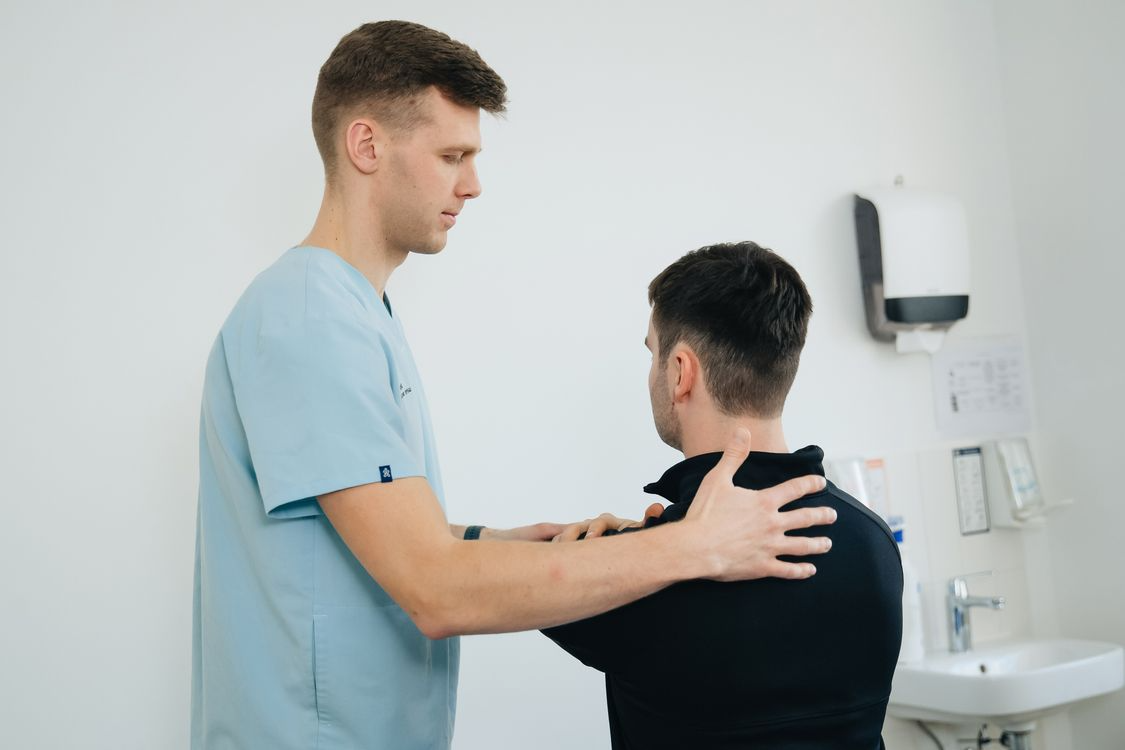
Sometimes a muscle imbalance builds up for so long that home stretching and posture awareness are not enough. This is when an assessment from a trained professional can make a real difference. Osteopathic treatment looks at how the joints, muscles, and connective tissue operate together as a whole system. It looks beyond the single spot where pain shows up. A practitioner will usually ask about daily habits, occupational setup, and past injuries. This helps them figure out where the original imbalance may have started.
Anyone looking for a practitioner in the UK can check the register held by the GOC. This register lists osteopaths who meet the training and practice standards needed to treat patients safely. Local clinics such as Arc Osteopathy often see patients with exactly this kind of long-standing compensation custom. They use hands-on assessment to trace pain back to its actual source. That source is far from the spot where it hurts.
Understanding muscle imbalances gives context to pain that might otherwise feel confusing or random. The pattern can be spotted early through simple daily changes. It can also be caught with support from a qualified practitioner. Either way, the body gets a much better chance. It can return to a more even, comfortable way of moving.



