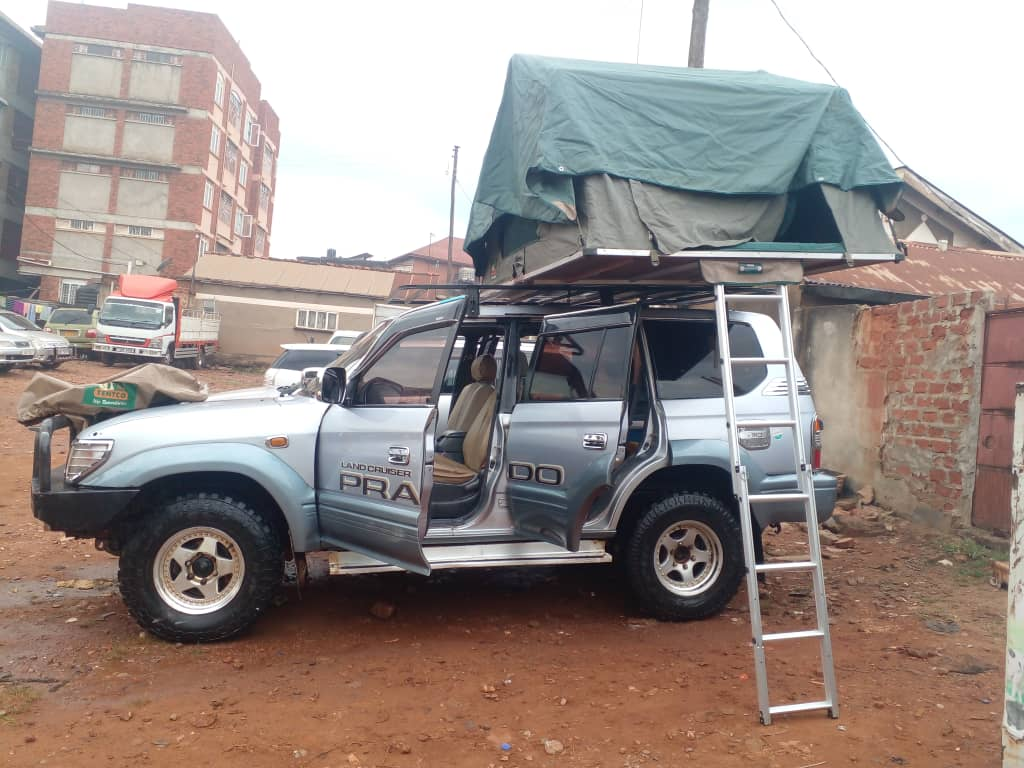
There’s something about lying in a tent bolted to the roof of your own 4×4, listening to the bush after dark, that a lodge room just can’t copy. A rooftop tent safari gives you the car, the bed and the freedom to change your plans over breakfast. That’s the whole appeal of a Roof Tent East Africa safari, and it’s why more independent travelers are eyeing Uganda, Kenya and Tanzania as self-drive countries instead of booking a fully guided trip.
Here’s the catch, though. The cheapest rental isn’t always the right one. Roads, park rules, camping plans, border crossings and your own driving experience all decide which vehicle makes sense. Get those right and the trip feels easy. Get them wrong and you’re stuck sorting out paperwork at a gate.
What Is a Rooftop Tent Safari in East Africa?
In simple terms, you rent a 4×4 that already has a tent fixed to the roof, then drive yourself between parks and sleep wherever camping is permitted. No unpacking tents at dusk. You open the roof tent, climb the ladder and that’s your bedroom. It’s a camping safari with a lot less hassle than pitching a ground tent every evening.
What normally comes with a rooftop tent vehicle?
Most rental setups include a 4×4 safari vehicle, the rooftop tent, a mattress and bedding, and some storage space. Many also add camping gear such as chairs, a table and cooking equipment, plus a spare tyre and basic recovery tools. Notice the word “most.” Equipment differs a lot from one company to the next, so ask for the exact list before you pay anything.
Who is this style of safari best for?
Couples and small groups of friends get the most out of it, especially if they’ve driven on rough roads before and like deciding their own schedule. It also suits people linking several parks in one trip. If the idea of a flat tyre on a gravel road makes you nervous, keep reading, because there’s a section on guided options further down.
Rooftop Tent Car Rental in Uganda
If you’re searching for rooftop ten Car rental uganda, you’re probably after a mix of wildlife, forest scenery and a bit of adventure. Uganda works well for that. Parks like Queen Elizabeth, Murchison Falls and Kidepo, plus the gorilla areas around Bwindi and Mgahinga in the southwest, sit at very different distances from Kampala, and the roads between them vary a lot.
Main routes out of big towns are usually fine. It’s the last stretch into a park, or the road to a remote campsite, where a proper 4×4 earns its keep. Rain makes this worse. Fuel is another thing to plan, since stations get thinner once you leave the towns. Fill up when you can, not when the needle is low.
Driving times also catch people out. A short distance on the map can eat half a day on narrow roads with trucks, boda-bodas and the odd goat. Build in slack.
Before you rent in Uganda, check: which parks and campsites you actually plan to use, whether camping is allowed there, what the vehicle is covered for on unpaved roads, and how far you’re realistically driving each day. A good rental company should answer all of that without dodging.
Rooftop Tent Rent a Car in Kenya
Kenya has been a self-drive destination for a long time, so searches for rooftop ten Rent a car in kenya lead to a fairly established market. The classic safari circuits are all within reach, but “within reach” doesn’t mean easy. Gravel, corrugations, washed-out tracks and muddy patches show up quickly once you leave tarmac, so ground clearance and a working 4WD system matter more than a shiny paint job.
Camping flexibility is a big draw here, though it depends on the park or conservancy. Entry fees, camping arrangements and sometimes ranger or guide rules vary from place to place, and they can change. Confirm current details before you set off rather than trusting an old blog post, including this one. Fuel is easy in towns and patchy in remote areas, so top up early.
Insurance and rental restrictions deserve real attention too. Some policies exclude certain roads, river crossings or night driving. Read that part twice.
What should you check before collecting the vehicle?
Do a proper walk-around, not a quick glance. Look at these things before you drive away:
- The 4WD system, including low range if you’ll need it
- Tyre condition and how many spares come with the car
- The tent, zips, ladder and mattress
- Camping and recovery equipment, tested rather than just counted
- Insurance terms, mileage limits and breakdown assistance
- Any driving restrictions written into the contract
Rooftop Tent 4×4 Tanzania Car Rental
Tanzania asks more of you as a planner. If you’re looking at rooftop ten 4×4 Tanzania Car Rental, think about distances first. The northern circuit around the Serengeti, the Ngorongoro area, Tarangire and Lake Manyara looks compact on a map, but the roads are long, some are rough, and remote stretches mean you’re a long way from help if something breaks.
Vehicle reliability becomes the main thing. Ask how the car has been maintained, what happens if it breaks down far from town, and who covers the cost of delays. Fuel planning matters more here too.
One important point: don’t assume every rental vehicle can enter every protected area or camp wherever it likes. Park access, camping permissions, insurance coverage and permitted driving areas all have rules, and those rules can change. Confirm the current situation with your rental provider and the relevant park authority before you finalize your route.
Uganda vs Kenya vs Tanzania: Which Rooftop Tent Rental Is Right for You?
None of these countries is the “best” one. They suit different travelers. This table is a rough guide, not a rulebook, so check conditions for your own route.
| Factor | Uganda | Kenya | Tanzania |
| Self-drive suitability | Workable on many routes, with rural roads that vary | Well-established, with many routes to choose from | Possible, but needs more planning and checking of rules |
| 4×4 importance | High | High | High |
| Safari flexibility | Good for mixing wildlife and forest areas | Strong choice of circuits | Great scope, but long distances limit spontaneity |
| Camping focus | Depends on park and campsite | Varies by park or conservancy | Needs careful permission checks |
| Road conditions | Mixed, tougher near remote parks | Tarmac to rough gravel | Remote stretches can be demanding |
| Best for | Travelers who like variety and don’t mind slow roads | First-time self-drivers and repeat visitors | Confident drivers with time to spare |
So which country is easier for a first self-drive safari? Kenya is often the comfortable starting point because the self-drive scene is more established, though that’s a general view, not a promise. For a longer camping journey, Uganda and Tanzania both reward patience. A stronger 4×4 matters most when you head to remote parks or travel in the rainy season. And if you’re crossing borders, the country matters less than the paperwork. The rental company has to allow it first.
What to Check Before Booking a Roof Tent East Africa Safari
This is where most trips are won or lost, so take your time.
Vehicle and tent
Ask about the age and condition of the car, how the 4×4 system works and the ground clearance. Then look at the tent itself: is it big enough for your group, is the mattress decent, does the ladder feel solid, and does the cover keep rain out? Storage capacity is worth a question too, because luggage plus food plus water fills a vehicle faster than you’d expect.
Rental contract
Read the insurance terms, the excess or deductible, the mileage policy and the rules on extra drivers. Check what breakdown support actually means in practice, whether border crossings are allowed, and which parks or roads are off limits. Be clear on who pays for damage, and in which situations.
Camping equipment
Don’t assume a “camping package” covers everything. Ask for the full list, item by item, and write down what’s missing so you can buy or bring it yourself.
How Much Does a Rooftop Tent Safari Cost?
Prices change by season, company and vehicle, so I won’t throw numbers at you. What helps more is knowing where the money goes: daily vehicle rental, camping equipment, insurance, park entrance fees, camping fees, fuel, food, any guide or ranger requirements, border fees and extra driver fees.
The cheapest daily rate can turn out expensive once you add everything up. A low advertised price with poor equipment, a tight mileage cap or heavy insurance excess may cost more than a pricier, better-prepared option. Compare the total cost of the trip, not just the headline vehicle rate.
Practical Driving Tips for a Self-Drive Rooftop Tent Safari
Start early. Wildlife is more active in the cooler hours, and you’ll have daylight to spare if something goes wrong. Don’t try to cover huge distances in one day just because the map says it’s possible. Rough roads eat time.
Check your fuel before heading into remote areas, look over the tyres each morning, and keep recovery gear where you can reach it without unloading the whole car. Download offline maps, because signal disappears more often than you’d think. Follow park speed limits and driving rules, and keep a respectful distance from animals. Wildlife viewing takes patience, and rushing it is how people end up too close. If park rules or local safety conditions make night driving a bad idea, don’t do it.
Should You Rent a Rooftop Tent 4×4 or Book a Guided Safari?
Self-drive gives you independence, a flexible itinerary and a real camping experience, which can be a great fit for longer trips. A guided safari takes the driving off your plate, brings local knowledge and makes logistics simpler. That’s handy if remote roads make you uneasy.
A simple rule: choose self-drive if independence and camping are the heart of the trip. Choose a guided safari if wildlife expertise, convenience and fewer headaches matter more.
FAQs About Rooftop Tent Car Rental in East Africa
Is a rooftop tent safe for an East Africa safari?
Many travelers use them without trouble, but nobody can promise absolute safety. Stick to approved campsites, follow park rules, keep food secured, stay aware of wildlife and listen to local advice.
Do I need a 4×4 for a rooftop tent safari in Uganda?
For many safari routes, yes, or at least it’s strongly advisable. Match the vehicle to your actual destinations, since a remote park needs more than a town-to-town route does.
Can I take a Kenyan rental car into Tanzania or Uganda?
It depends on the rental company’s permission, the insurance, the vehicle documents and border requirements. Ask in writing before you book.
What should you pack for a rooftop tent safari?
Pack suitable clothing for hot days and cold nights, personal items, a torch or headlamp, a power bank, drinking water and a backup way to navigate. Add anything the rental company doesn’t supply.
Is a rooftop tent better than staying in safari lodges?
Neither is better outright. A rooftop tent gives flexibility and a closer feel for the bush, usually at a lower cost, while lodges give comfort and less effort. Pick what fits your budget and travel style.
How many days do I need for a rooftop tent East Africa safari?
It depends on the country, the parks, the driving distances and whether you cross borders. In general, fewer destinations with more time in each beats racing between parks.
Final Thoughts
In Uganda, think about road conditions and your route. In Kenya, focus on vehicle capability, park access and camping logistics. In Tanzania, pay close attention to vehicle suitability, park rules and long-distance planning. Sort those out, and a Roof Tent East Africa safari can be one of the most memorable ways to see the region.




Having worked with safaris in Tanzania for many years, I would like to add one thing to this: self-drive can be a great adventure, but you will usually see more with an experienced guide.
The Serengeti is enormous, and finding wildlife is not simply a matter of driving around and hoping to come across it. Guides are in regular contact with each other and share information about where they have seen large prides of lions, cheetahs, leopards or big herds. That local knowledge can make a big difference, especially for a first-time visitor.
And if the main attraction of the rooftop tent is the camping experience, another option is to join a camping group safari. This can be considerably cheaper than renting a vehicle with a rooftop tent, while you still get the experience of sleeping in a tent and exploring the parks with a guide.