The French Riviera has a reputation for yachts, film festivals and grown-up glamour. Families sometimes assume it is not for them. Antibes proves otherwise. Halfway between Nice and Cannes, this small town has sandy beaches with gentle water, a car-free old town that children can explore on foot, a real castle, a star-shaped fort and some of the best ice cream on the coast. Here is how to plan a family week there.
Why Antibes works for families
Three things make Antibes easier than many Riviera towns.
- It is compact. The old town, the market, the main beach and the harbour are all within a ten-minute walk of each other. Short legs can manage it.
- It has sand. Much of the Riviera is pebbles. Antibes has several sandy beaches, which makes building castles and paddling far more fun.
- It is a real town. People live here year-round, which means bakeries, pharmacies, playgrounds and supermarkets, not just tourist shops.
The best beaches for children
La Gravette is the old town’s own little beach, tucked against the sea walls next to the harbour. The water is sheltered and shallow, and you can walk there from anywhere in the old town with a bucket and spade.
Plage du Ponteil is a longer stretch of fine sand just south of the old town, with gently sloping water and public facilities. It is a favourite with local families.
Juan-les-Pins, just across the cape, has wide sandy beaches and a lively promenade. It is busier and more resort-like, but very easy with children.
In July and August, go early in the morning or after four in the afternoon, when the sun is gentler and the beaches quieter.
Things to do with kids
Explore the old town like a maze. The lanes inside the ramparts twist, climb and open on to tiny squares. Give older children a map and let them lead. Look out for the Safranier quarter, a corner of flower pots and stone steps that feels like a village of its own.
Visit the market. The covered Provençal market on the Cours Masséna is a feast for the senses. Let the kids choose the fruit for the day and try socca, a warm chickpea pancake that is the Riviera’s favourite street snack.
Climb the Fort Carré. This sixteenth-century fortress, shaped like a star, sits on a headland above the harbour. Guided visits take you up on to the walls, with views over the boats and the whole bay. Children love the tunnels and the idea of a real fort.
See the Picasso Museum. Housed in a castle right on the sea, it is a manageable size for kids. The terrace, with its sculptures facing the water, is the highlight for little ones.
Walk inside a giant. On the Bastion Saint-Jaume by the port, Jaume Plensa’s huge sculpture Nomade is made of white steel letters. You can step inside it, and every child wants to.
Watch glass being blown in Biot. The nearby hilltop village of Biot is famous for its glassblowers. Watching molten glass turn into a vase is a guaranteed hit, and the village itself is pretty and small.
Take a boat. In season, boats run from Juan-les-Pins and Cannes to the Îles de Lérins, two small islands with pine forests, a fort and calm swimming coves. It makes a perfect day out.
A note for returning visitors: Marineland, the marine park long associated with Antibes, closed in early 2025. Plan around it.
Day trips by train
Antibes station sits on the coastal line, which makes car-free day trips easy. Nice, with its old town and long promenade, is a short ride east. Monaco is a little further, and children are usually delighted by the harbour and the changing of the guard at the palace. Cannes is a few stops west.
Where to stay with a family
You have two broad options. Resort hotels and apartments outside town offer pools and parking but mean driving everywhere. Staying inside the old town means you walk to everything, but you will want to choose carefully.
The old town’s houses are historic, which brings a few things to check:
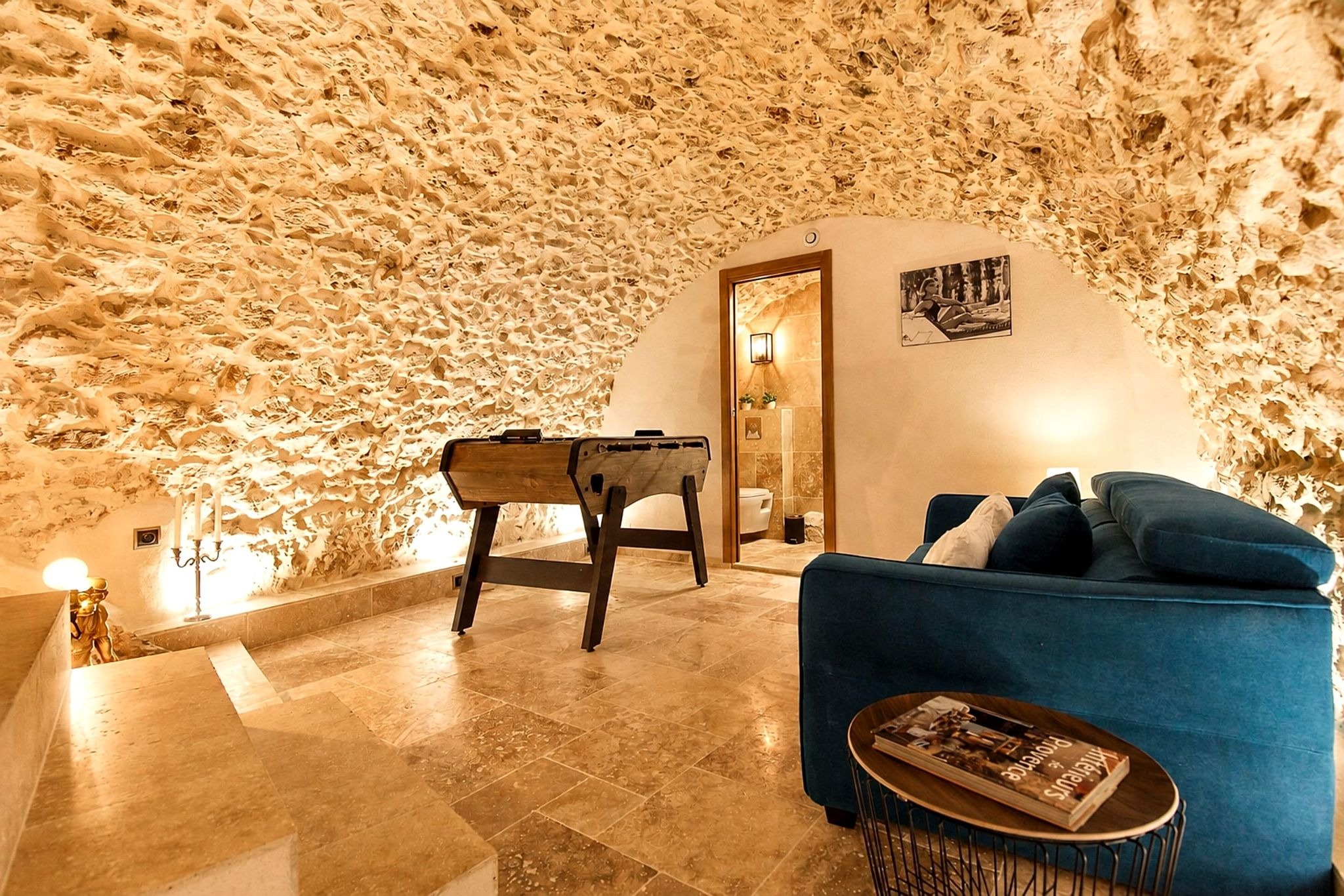
- Stairs. Old townhouses are tall and narrow. With toddlers, ask how many floors there are and where the bedrooms are.
- Bathrooms. With older children or two families together, en-suite bedrooms make mornings far easier.
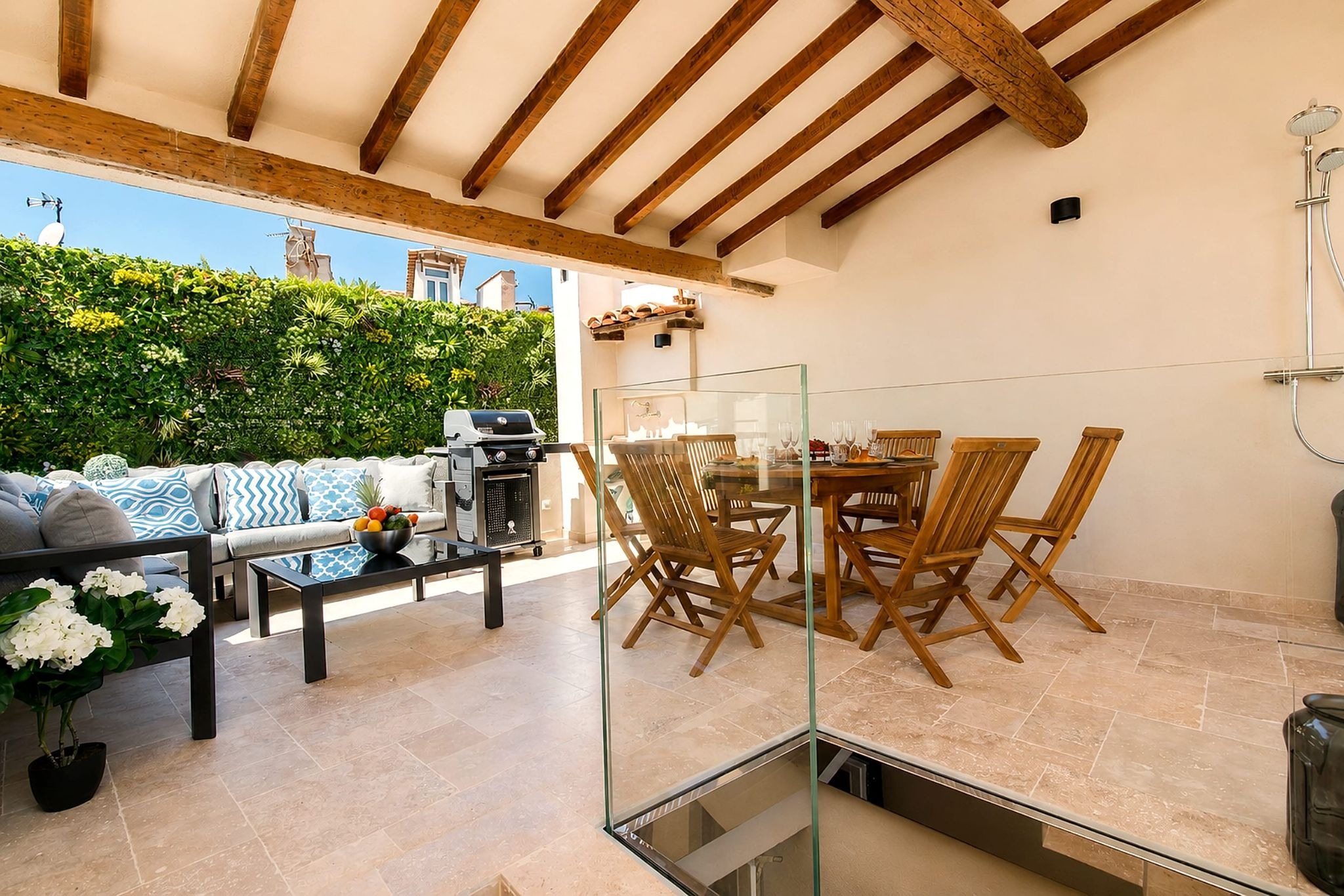
- Outdoor space. A terrace for dinner is gold with kids: they can move around while the grown-ups finish their meal.
- Noise. Ask which streets stay lively late in summer. A good host will tell you honestly.
Some hosts make this easier than others. Absoluty Antibes, a small collection of seven restored townhouses inside the ramparts, has a page that goes through each house one by one: stairs, terraces, bedroom layout and who each one suits best. Two of its houses have three en-suite bedrooms, which works well for a family with older children or two families travelling together.
A sample family day
If you are not sure how to pace it, here is a day that works for most ages. Start early at the market, with fruit for later and a warm socca to share. Walk the ramparts while it is still cool, then spend the late morning on the sand at La Gravette or Plage du Ponteil. Head home or to a shaded terrace for lunch and a long rest during the hottest hours, which is what local families do too. Around four, visit the Picasso Museum or the Fort Carré, then wander to the port to look at the boats and finish with an ice cream on the way back. Dinner on a terrace, an early night, and repeat.
Practical tips
- Best time to go: June and September offer warm water without the August crowds. Spring and autumn are ideal for exploring rather than swimming.
- Getting there: Nice Côte d’Azur airport is about half an hour by car. Many families from the US connect through Paris or another European hub.
- Eating out: French families eat late, often after eight. Lunch is the easiest meal to eat out with children; plan picnics or dinners at home for the evenings.
- Strollers: The old town has cobbles and steps. A light stroller or a carrier is easier than a large buggy.
Antibes gives you the Riviera’s light, colour and sea, at a pace that works for the whole family. It is the kind of place children remember, and parents want to come back to.



