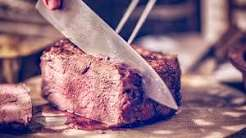
Here’s a myth worth retiring: the fastest way to tenderize a steak is to beat it flat with a mallet. Do that to a decent ribeye and you’ll squeeze out moisture, tear the fibers into mush and end up with something closer to a wet paper towel than a steak. Pounding has its place — thin cutlets, chicken-fried steak — but for most cuts it’s the bluntest tool in the box. Tenderness actually comes from chemistry and patience far more than force. Cheaper cuts like flank, skirt, chuck eye and flat iron carry big beefy flavor; they just need a little help before they meet the grill. These six methods are that help, ranked from “do this every time” to “save it for the really stubborn cuts.”
1. Salt It Early (Dry Brining)
Salt is the single most reliable tenderizer you own. Salt a steak at least 40 minutes before cooking — ideally a few hours, uncovered in the fridge — and two things happen. First, the salt draws moisture out, dissolves into it, and gets reabsorbed, seasoning the meat all the way through. Second, it loosens the muscle proteins so they hold onto juice instead of wringing it out on the grill.
Use about half a teaspoon of kosher salt per pound. Skip the last-minute sprinkle if you can; salt applied seconds before cooking mostly seasons the surface. If you’re short on time, salt right before grilling rather than landing in the awkward 10-to-30-minute window, when the surface is wet and the meat hasn’t reabsorbed anything yet.
2. Marinades: Acid With a Time Limit
Acidic marinades — citrus juice, vinegar, wine, yogurt — break down surface proteins and add flavor, which is why flank steak and carne asada love them. But acid is a sprinter, not a marathon runner. Past two hours, and especially past overnight, the surface turns mushy and gray while the inside stays exactly as tough as before.
Keep acidic marinades between 30 minutes and 2 hours. Yogurt and buttermilk are gentler (lactic acid works slowly), so they can go overnight safely — that’s the secret behind a lot of great kebab recipes. If you want the full science and more timing charts on how to tenderize steak with each method, it’s worth a careful read before your next cookout.
3. Enzymes: The Fruit Trick
Pineapple, papaya, kiwi and Asian pear contain enzymes that genuinely dissolve tough connective protein. A kiwi mashed into a marinade can tenderize a stubborn cut in 30 minutes flat — Korean cooks have used Asian pear on bulgogi beef for centuries. The catch: these enzymes don’t know when to stop. Leave meat in a fresh-pineapple marinade for hours and you’ll get meat paste. Thirty minutes is plenty, and canned pineapple juice barely works because heat kills the enzyme.
4. Score It, Slice It Right
Some “tenderness” is just geometry. Scoring a flank steak in a shallow crosshatch before marinating lets flavor in and shortens the long fibers you’ll chew through. Even more important is what happens after cooking: always slice against the grain. Look for the lines running through the meat and cut perpendicular to them. The same steak sliced with the grain can feel twice as tough — this one habit changes flank and skirt steak completely, and it costs nothing.
A note on mechanical tenderizers
Blade tenderizers (the spring-loaded Jaccard style) do work — they sever fibers throughout the cut, not just at the surface. Use them sparingly on thick, tough cuts, cook the steak to at least medium for food safety since surface bacteria get pushed inside, and never combine one with an enzyme marinade unless you enjoy steak-flavored pudding.
5. Low, Slow and Patient
Some cuts refuse every shortcut and simply need time. Chuck and other hard-working muscles are loaded with collagen, which only melts into gelatin with slow, moist heat. That’s not a grilling failure — it’s a sign the cut wants braising, smoking or a sous vide bath instead. A 24-hour sous vide at 131°F turns chuck into something that eats like prime rib. Know your cut, and pick the method it deserves.
6. Cook It Right and Let It Rest
All the tenderizing in the world won’t save a steak cooked to gray. Tough-but-flavorful cuts are best at medium-rare to medium, where they’re juicy but the fibers have relaxed. Searing fast over serious heat matters too: a 1500 degree steak grill locks a crust onto a well-prepped cut in about a minute per side, so the inside stays tender instead of slowly tightening on a weak grill. Then rest the steak half as long as it cooked. Cut early and the juice ends up on the board instead of in the bite.
Putting It Together
You don’t need all six tricks on one steak. A flank steak might get salt, a 90-minute marinade and a careful against-the-grain slice. A ribeye needs nothing but salt and a hot grill. Start with dry brining — it’s free, it’s easy, and it improves every cut you own.
One last shopping habit ties it all together: buy the tough cuts on purpose, and buy them fresh. Meat that’s been sitting in a discount bin for days won’t reward any technique. Look for deep red color, firm texture and decent marbling even in lean cuts — thin streaks of fat through a flank or chuck eye mean flavor and a head start on tenderness. Then match the method to the meat in front of you, and the “tough cut” section of the butcher case stops being a gamble and starts being the best value in the store.



