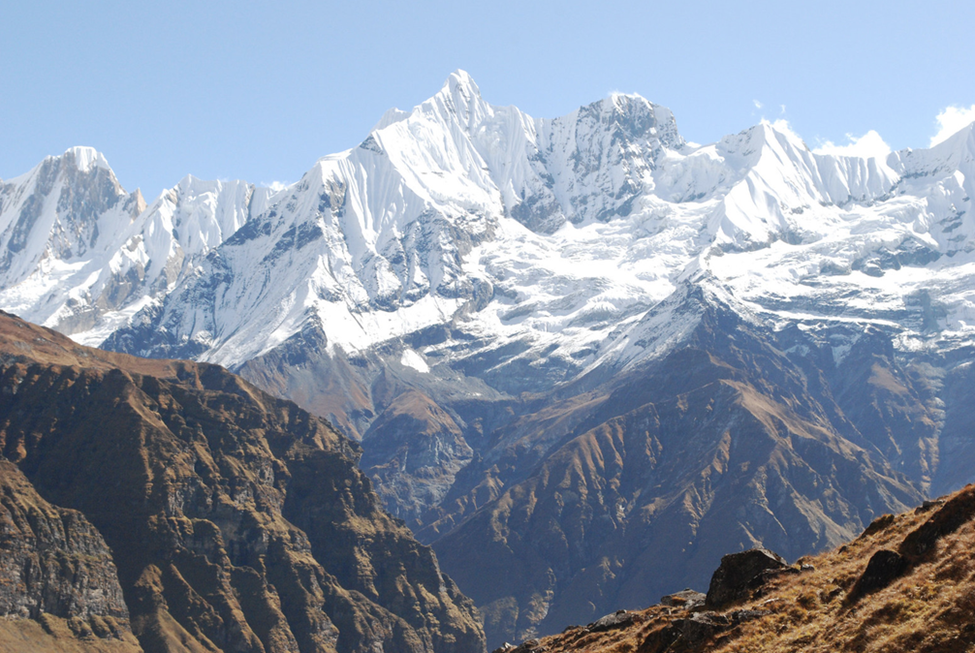
If you have a week available and Annapurna Base Camp on your list, you are probably already wondering whether seven days is enough. The honest answer is yes, it is possible. The Annapurna Base Camp Trek in 7 days is done every season by trekkers who have limited time but want to reach the base camp without stretching their trip to the more standard ten to twelve day duration.
That said, possible and comfortable are two different things. A Annapurna Base Camp Trek in 7 days is faster than the standard itinerary, and that pace has real consequences for how the trek feels, how your body handles the altitude, and how much of the trail you actually get to enjoy. This guide gives you a straight and honest picture of what the seven day version involves, who it suits, and what you need to do to make it work safely.
What the Standard Annapurna Base Camp Route Looks Like
Before talking about the seven day version, it helps to understand the standard route. The full Annapurna Base Camp trek can take around ten to twelve days depending on the starting point and itinerary. The route begins at a much lower elevation and reaches 4,130 meters at Annapurna Base Camp.
The standard itinerary moves at a pace that allows the body to adjust to altitude gradually. It includes rest time at key villages, morning views without rushing to the next teahouse, and the kind of slow walking rhythm that lets you notice the rhododendron forests, the terraced rice fields, the hot springs at Jhinu Danda, and the close views of Machhapuchhre and the Annapurna massif as you move higher.
Short Annapurna Base Camp Trek itineraries compress this into fewer days by starting with a drive or jeep ride to a higher point on the route, cutting out some of the lower sections, and moving faster on each walking day. The result is that you reach the base camp in the same place, but the journey getting there is more focused and less relaxed.
The 7 Day ABC Trek Route: Day by Day
The 7 day ABC trek in Nepal typically begins with a flight from Kathmandu to Pokhara, followed by a jeep or taxi to Kimche or Ghandruk rather than starting on foot from Nayapul. This alone saves a full day and allows the trek to begin at a higher elevation. From there, the route follows the standard trail through Chomrong, Himalaya Hotel, and Deurali to the base camp and back.
The day by day breakdown below shows how a seven day itinerary is typically structured.
| Day | Route | Elevation | Walking Time |
| Day 1 | Pokhara to Ghandruk by jeep, with a short walk if required | 1,940 m | 3 to 4 hours walking |
| Day 2 | Ghandruk to Chomrong | 2,170 m | 4 to 5 hours |
| Day 3 | Chomrong to Himalaya Hotel | 2,920 m | 5 to 6 hours |
| Day 4 | Himalaya Hotel to Annapurna Base Camp | 4,130 m | 6 to 7 hours |
| Day 5 | Annapurna Base Camp to Bamboo | 2,310 m | 6 to 7 hours |
| Day 6 | Bamboo to Ghandruk | 1,940 m | 5 to 6 hours |
| Day 7 | Ghandruk to Pokhara by jeep | Return | About 2 to 4 hours drive |
This schedule works, but it is important to be clear about what it asks of you. Days three, four, and five are long and demanding. Day four in particular, which is the push from Himalaya Hotel all the way to the base camp, involves significant elevation gain over a full day of walking and reaches the highest point of the entire trek.
The Altitude Question on a 7 Day Schedule
Altitude is the part of the Annapurna Base Camp Trek in 7 days that deserves the most honest attention. The base camp sits at 4,130 meters. Most trekkers feel the change in air quality somewhere above 3,000 meters, and the seven day schedule does not include a dedicated acclimatisation day the way a longer itinerary does.
7 Day ABC Trek Nepal itineraries rely on the gradual ascent profile of the route itself to provide enough acclimatisation. Because the trail moves up steadily rather than jumping to altitude quickly, many trekkers manage it without serious symptoms. The route gains altitude gradually, but the seven day schedule still involves several long walking days and reaches 4,130 meters. Without an acclimatisation day, trekkers need to pay close attention to how they feel as they ascend.
Headache, fatigue, and disturbed sleep can occur as altitude increases. If symptoms become worse or do not improve, it is important to stop ascending and seek advice from a qualified guide or medical professional. What the seven day schedule does not allow for is a rest day if mild symptoms appear. On a ten day itinerary, a rest day at Chomrong or Deurali is built in for exactly this reason. On the seven day version, you are relying on your body to adapt without that buffer.
This is not a reason to avoid the Short Annapurna Base Camp Trek, but it is a reason to take altitude preparation seriously before you leave. Discussing the trip with a doctor, considering a course of Diamox if recommended, and arriving in Nepal a day or two before the trek rather than flying in the night before the start all reduce the risk of altitude becoming a problem on a compressed schedule.
Who Should and Should Not Attempt the 7 Day Version
Not everyone is the right fit for the compressed schedule, and being honest about this before booking saves a difficult situation on the trail.
The Annapurna Base Camp Trek in 7 days suits trekkers who have some prior experience on mountain trails, are comfortable walking five to seven hours a day for several consecutive days, are comfortable with several consecutive days of walking and understand the challenges of trekking at higher altitude, and are travelling in spring or autumn when the trail conditions and weather are most stable.
The compressed schedule is not well suited to first-time trekkers with no prior hiking experience, people who have had altitude sickness on previous trips, anyone with respiratory or cardiovascular health concerns that have not been cleared by a doctor, or people travelling in winter or early March when cold temperatures and snow are more likely on the upper sections.
The physical preparation required for this trek is worth stating clearly. Regular walking with a pack for three to four hours on varied terrain, done consistently in the months before the trip, makes the seven day schedule manageable. Arriving without any preparation and expecting the trail to feel easy is not realistic at this pace.
What the 7 Day Schedule Skips
It is worth being clear about what the compressed itinerary leaves out compared to the full route.The lower sections of the trek around Tikhedhunga and Ulleri, where the stone staircase climbs through rhododendron forest and the views of the Modi Khola valley open up below, are begins by vehicle at Ghandruk. The hot springs at Jhinu Danda, which sit just off the main trail after Chomrong, are not easily included on the way up given the pace, though some trekkers stop there on the descent.
The rest morning at Machhapuchhre Base Camp, which on a longer itinerary gives you a quiet hour to watch the light change on the peaks before the final push to Annapurna Base Camp, tends to get skipped in favour of an early start.
The compressed itinerary makes trade-offs. The destination is the same. The surrounding experience is trimmed. Whether that trade-off is right depends on what you are coming to Nepal for. If reaching the base camp is the primary goal and the journey is secondary, the seven day version delivers.
If the slower exploration of the route, the extended mornings at teahouses, and the unhurried rhythm of a mountain walk are what you are looking for, adding three to five days to the itinerary is worth it.
Practical Things to Sort Before You Go
Annapurna Base Camp Trek in 7 days preparation involves the same logistics as a longer trek, just with less time to sort things out on arrival in Nepal. Getting organised before you fly saves the stress of running around Kathmandu or Pokhara the day before you start.
Annapurna Conservation Area Permit and TIMS card are required for this trek. For most foreign trekkers, the current fees are NPR 3,000 for the Annapurna Conservation Area entry permit and NPR 2,000 for the TIMS card, for a combined total of NPR 5,000. If you are booking through an operator, they typically handle this as part of the package.
A licensed guide is required for the applicable Annapurna trekking routes under the current TIMS rules, and a registered trekking agency can arrange the guide and TIMS card for you. A guide who knows the route manages the pace sensibly, reads the weather, carries basic first aid, and handles the communication with teahouses at each stop. On a compressed schedule where there is little room for error, having someone experienced on the trail with you matters more than on a longer, more relaxed itinerary.
Gear for this trek does not need to be expensive, but it does need to be right. Broken in trekking boots, warm layers for the nights above Chomrong, a down jacket for the base camp area, a warm sleeping bag suitable for cold nights at higher elevations, a trekking pole for the steep descents, and a daypack that sits comfortably on your back for seven hours cover the essentials.
Is the Annapurna Base Camp Trek in 7 Days Worth It?
The Annapurna Base Camp Trek in 7 days is worth it for the right person in the right condition. If your schedule genuinely does not allow more time, if you are fit and have some trekking experience, and if you prepare properly for the altitude and the daily distances, seven days is enough to reach the base camp and come back with a real experience of the Annapurna region.
7 Day ABC Trek Nepal is not a shortcut in the sense of missing the point. The base camp itself, surrounded by the walls of the Annapurna sanctuary with Machhapuchhre directly ahead and the massif filling the skyline, is worth the effort regardless of how many days it took to get there.
The seven day version gives you less time to relax at the base camp. You reach the base camp, enjoy the views, and then begin the descent. The longer itinerary gives you time to sit with that view for a morning, to feel the altitude settle, and to walk back at a pace that lets the mountains stay with you a little longer. If that experience matters to you, adding a few extra days will give you more time to enjoy the trail at a slower pace.



