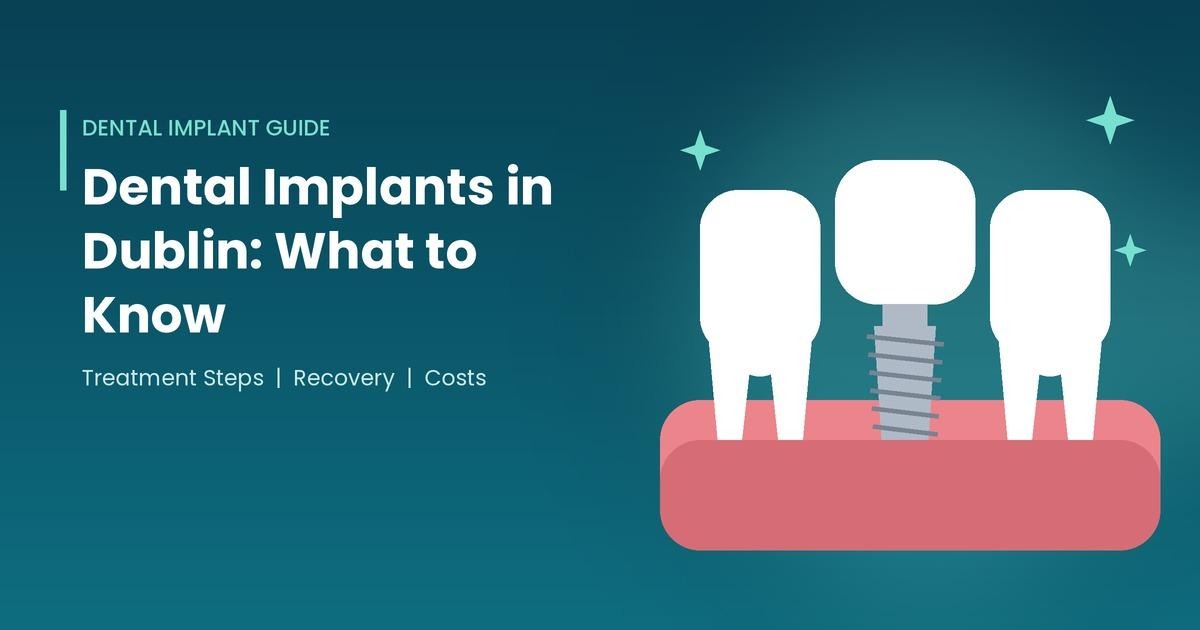
A dental implant is a small titanium post placed in the jawbone to replace the root of a missing tooth. Once it bonds with the bone, it supports a crown, bridge or denture that looks, feels and works like a natural tooth. For most healthy adults, implants are the longest-lasting way to replace missing teeth.
If you are weighing up implants, this guide explains how the treatment works, who is suitable, what recovery looks like and how to plan the cost. It also covers the questions to ask any Dentist Dublin clinic before you commit.
How Does a Dental Implant Work?
Every implant restoration has three parts:
- The implant: a titanium post that sits in the jawbone and acts as the new root.
- The abutment: a connector that attaches to the implant and holds the visible tooth.
- The crown, bridge or denture: the visible replacement tooth or teeth, often made from strong, natural-looking zirconia or porcelain.
Over the weeks after placement, the bone grows tightly around the implant surface. This process, called osseointegration, is what makes an implant so stable. It also helps preserve the jawbone, which tends to shrink after a tooth is lost.
Types of Dental Implant Treatment
Implants can replace one tooth, several teeth or a full arch. The right option depends on how many teeth are missing and the condition of your bone and gums.
| Treatment | Best For | What to Expect |
|---|---|---|
| Single tooth implant | Replacing one missing or failing tooth | One implant with a crown. Neighbouring teeth are left untouched. |
| Implant-supported bridge | Several missing teeth in a row | Two or more implants support a bridge, so you need fewer implants than teeth. |
| Implant-retained dentures | Denture wearers with loose or uncomfortable dentures | Implants anchor a removable denture so it clicks firmly into place. |
| Full arch implants | Replacing all teeth in the upper or lower jaw | A fixed bridge supported by four or more implants, often called All-on-4 or All-on-X. |
Who Is a Good Candidate for Implants?
Most adults in good general health can have implants. Your dentist will usually look at:
- Bone volume and density. Enough bone is needed to hold the implant. If bone has been lost, a bone graft may be recommended first.
- Gum health. Active gum disease should be treated before an implant is placed.
- Medical history. Conditions such as poorly controlled diabetes and some medications can affect healing, so always share your full history.
- Smoking. Smoking slows healing and increases the risk of implant problems. Cutting down or stopping greatly improves outcomes.
- Commitment to aftercare. Implants need the same daily cleaning and regular check-ups as natural teeth.
The Treatment Journey Step by Step
Knowing what happens at each stage makes the process far less daunting.
- Consultation and assessment. Your dentist examines your mouth, discusses your goals and explains the options and costs.
- 3D CBCT scan. A cone beam CT scan creates a three-dimensional image of your jaw. It shows bone height and width, nerve positions and sinus location, allowing precise and safe implant planning.
- Implant placement. The implant is placed under local anaesthetic. Most patients describe the procedure as more comfortable than they expected.
- Healing. The implant bonds with the bone over roughly three to six months. A temporary tooth can often be worn during this time.
- Final restoration. Once healing is complete, the abutment and custom-made crown, bridge or denture are fitted.
- Review and maintenance. Regular check-ups and professional cleaning keep the implant and surrounding gums healthy.
What Does Recovery Feel Like?
Recovery after implant placement is usually straightforward. Mild swelling, tenderness and some bruising are common for a few days and are generally well managed with over-the-counter pain relief. Most people return to work within a day or two.
To help healing:
- Eat soft foods for the first few days and avoid chewing on the implant site.
- Keep the area clean with gentle brushing and any mouthwash your dentist recommends.
- Avoid smoking and alcohol while the area heals.
- Attend every follow-up appointment.
How Much Do Dental Implants Cost in Dublin?
Implant costs vary between clinics and depend on the number of implants, the type of restoration, and whether extra procedures such as bone grafting are needed. When comparing quotes, check that each one includes:
- The consultation and CBCT scan
- The implant, abutment and final crown or bridge
- Any temporary teeth during healing
- Bone grafting, if required
- Follow-up reviews
An all-inclusive written quote is the clearest way to compare like with like. Many clinics also offer free implant consultations and payment plans to spread the cost.
Tax Relief on Dental Implants
Dental implants count as non-routine treatment, so you can claim tax relief at 20% on the cost through Revenue. Your dentist completes a Med 2 form, which you keep with your receipts and use when making your claim through myAccount. On a full treatment plan, the relief can make a significant difference to the final cost.
Questions to Ask Before You Start
Before agreeing to treatment, it is worth asking:
- What postgraduate training in implant dentistry does the dentist have?
- Will I have a 3D CBCT scan before the implant is planned?
- Is the quote all-inclusive, and what could add to the cost?
- How long will the full treatment take?
- What material will my final crown or bridge be made from?
- What aftercare and follow-up do you provide?
Frequently Asked Questions
Does getting a dental implant hurt?
The procedure is carried out under local anaesthetic, so you should feel pressure but not pain. Mild soreness for a few days afterwards is normal.
How long do dental implants last?
With good daily care and regular check-ups, implants can last for many years and often a lifetime. The crown on top may eventually need replacing due to normal wear.
Can I get implants if I have been told I lack bone?
Often, yes. Bone grafting can rebuild lost bone, and a CBCT scan helps your dentist decide the best approach.
How long does the whole process take?
From placement to final crown, most single implants take around three to six months, mainly to allow the bone to heal around the implant.
Are implants better than dentures or bridges?
Implants do not rely on neighbouring teeth for support and help preserve the jawbone. For suitable patients, they usually offer the most stable and natural-feeling result.
Final Thoughts on Dental Implants in Dublin
Dental implants can restore your smile, your bite and your confidence, but good results start with careful planning. Choose a clinic that scans before it plans, explains every cost upfront and supports you through healing and beyond. Speaking with an experienced Dentist Dublin team is the best first step towards a lasting, natural-looking smile.