
When a disaster strikes, packing is not always the most difficult task; often, the hardest parts are the stress, the noise level, managing time, and remembering what is most important. When an elderly person lives at home, a go-bag is not a luxury, but rather an effective tool to safeguard their health, comfort, and dignity when routines are interrupted.
This guide organizes the bag into simple categories, enabling it to be easily assembled, maintained, and used by someone else in case you are not present.
Start with the basics
An effective go-bag must address three objectives: remain safe, remain recognizable, and remain operable for at least 24–72 hours.
The following are the essentials for the go-bag checklist:
- Durable bag/backpack: One that can be easily carried (or a small wheeled bag if mobility is not an issue).
- Water: At least 1–2 liters per person to begin with, and a collapsible bottle (preferred).
- Food: 2–3 days of non-perishable food (soft and easy-open food is best).
- Flashlight/headlamp: A headlamp is preferred as it leaves hands free.
- Power: Extra batteries (or a rechargeable battery), phone charging cable, and a power bank (checked and fully charged every month).
- Minor first-aid kit: Bandages, antiseptic wipes, and analgesics.
- Clothing: Coat (light jacket, shawl, or thermal wrap) and extra socks.
- Weather protection: Poncho (rainproof) and a small blanket in case of an emergency.
- Cleanliness supplies: Wet wipes, tissues, hand sanitizer, toothbrush/toothpaste.
- Face masks: Helpful to prevent smoke inhalation, dust, and infection in overcrowded shelters.
- Work gloves: To prevent injuries from debris, broken glass, or moving objects.
- Whistle: Simple, loud, and effective for emergencies.
Note: When hand muscles are weak, do not use packages that require tight twisting, tearing, or have tiny tabs. Select pull-top tins, easy-open pouches, and bigger zipper pulls.
Health and care essentials
This is where an at-home care go-bag becomes distinct from a regular travel bag. This is meant to ensure care remains consistent regardless of the change in location.
Drugs (Non-negotiable)
One of the greatest risks during evacuation or displacement is medication error; therefore, make this section very clear.
- 3–7 days of necessary drugs (rotate before expiry).
- A printed drug list (name, amount, time, purpose of use).
- Allergy list (food, medication, latex, adhesives).
- A small pill holder (provided it decreases confusion) and an additional written schedule.
- Contact information for the pharmacy and prescriber.
- Duplicates/photographs of prescriptions (paper copies and stored on a phone).
In case the individual has special treatments (inhalers, insulin, eye drops), fill the pack with spares and attach brief messages on how to use them. A helper can be guided to act confidently by a simple line such as: “Blue inhaler: 2 puffs when feeling out of breath.”
Quick card medical information
Print this on one waterproof sheet (or laminated card):
- Name, date of birth, address.
- Important diagnoses (e.g., heart disease, dementia, diabetes).
- Baseline requirements (mobility level, communication requirements, hearing/vision notes).
- Main emergency contact + backup contact.
- Doctor/clinic details.
- Crucial red flags (e.g., “If chest pain persists for more than 10 minutes, seek emergency care.”)
Here, too, is the most appropriate spot to include a line of quiet, sensible advice such as: “Gets nervous around people; talk slowly and give simple options.”
Personal care objects (Dignity issues)
Select small items and prioritize what avoids unhappiness or illness:
- Continence supplies (pads/briefs), disposable bags, and barrier cream.
- Extra underwear and a pair of loose clothes.
- A small towel or absorbent cloth.
- Denture care: Container, adhesive (if used), cleaning tablet/brush.
- Spare glasses + case (if applicable).
- Supplies for hearing aids (additional batteries or charging cable).
- Mobility aids that are easily transportable (cane tip, spare ferrules, gait belt if used by trained carers).
If the go-bag contains oxygen, there should be a basic, written oxygen plan (flow rate, when used, supplier number) and any portable essentials that are not dangerous to carry. Since the logistics of oxygen vary considerably, have a separate “oxygen grab kit” kept beside the main bag.
Care coordination note (Use your “second brain”)
When fatigued, people are often unable to remember information. Add a one-page “care snapshot”:
- Plain language morning and evening routine.
- Food preferences and swallowing requirements.
- Mobility/transfer notes (safe/unsafe methods).
- Avoidance behaviors and relaxation techniques.
It is also beneficial to note how formal services fit in. If the individual receives in-home Aged Care support, include the provider’s name, schedule, and instructions to resume care after the evacuation.
Comfort and communication objects
Disasters are stressful, and elderly people can be particularly susceptible to confusion, anxiety, and sensory overload. Some minor comfort products can make a serious difference to cooperation, sleep, and emotional health.
Comfort and grounding
- A small blanket, light shawl, or a familiar scarf (comfort + warmth).
- Something small that is considered normal/grounding (family photo, prayer beads, a small book).
- Earplugs (for noisy shelters) and an eye mask if sleep is difficult.
- Low-carb snacks that are familiar (and compatible with dietary restrictions).
Simple communication tools
- A thick pen/marker (helpful for hearing loss, stress, or writing instructions) and a notepad.
- An information card in case of language barriers.
- Essential numbers in written form (do not rely only on a phone).
Manageable food and hydration
The elderly can experience oral care problems, difficulty swallowing, or stress-induced loss of appetite. Pick foods that are:
- Soft and easy to chew (porridge sachets, soft bars, crackers with spreads).
- Easy to digest (not too spicy or very dry).
- Easy to serve (single-serving).
If there are swallowing issues, pack the correct thickening agent and include a clear indication of safe textures. Safety beats variety.
Keep it ready and usable
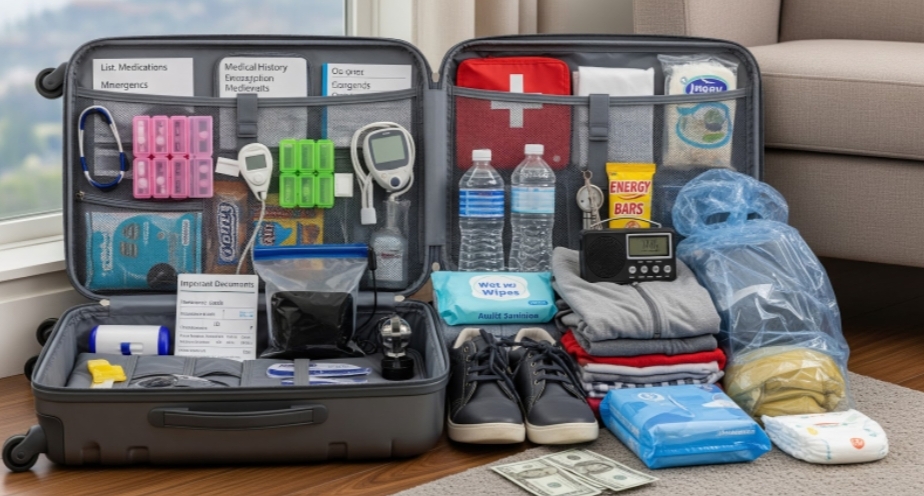
An emergency bag that is ideal but difficult to locate or carry will fail when needed. The aim is preparation rather than perfection.
Placement and access
- Keep the bag in the same open location (close to the main exit is best).
- Add a tag with the name of the person and the primary contact number.
- In case of difficulties with stairs, consider having a duplicate mini-bag on each floor.
Routine maintenance (10 minutes every month)
Set a regular monthly reminder to:
- Check expiration dates (meds, food, batteries).
- Charge power banks and devices.
- Replace water.
- Compare printed lists with existing prescriptions and contacts.
- Reconsider whether needs have changed (mobility, continence, new diagnoses).
Make it easier for helpers
The person who retrieves the bag during a disaster may be a neighbor, volunteer, or stranger. Add a colorful folder titled READ FIRST that includes:
- The fast card and drug list.
- The care snapshot and emergency contacts.
- Copies of ID/insurance documents (where applicable).
- A brief comment on where the individual feels most secure sitting/standing and how to help without causing injury.
When the plan involves contacting local disaster services, provide the necessary local numbers and directions. In an emergency, knowing exactly where to find assistance helps reduce panic and allows for faster decision-making.
A quick “two-bag” strategy
The most appropriate arrangement for many families is:
- Main go-bag: Everything listed above.
- Mini grab pouch: Phone, charger, IDs, medication list, one day’s worth of meds, wipes—just large enough to pick up on the spot if evacuation is chaotic.
This minimizes the chance of forgetting the most important items when time is short.
Assembling a disaster go-bag is one of those uncommon activities that is rewarding even if you never need it. The activity requires clarity: you must understand what is important, what is needed, and what keeps an older adult safe and comfortable when their rhythm is broken.



