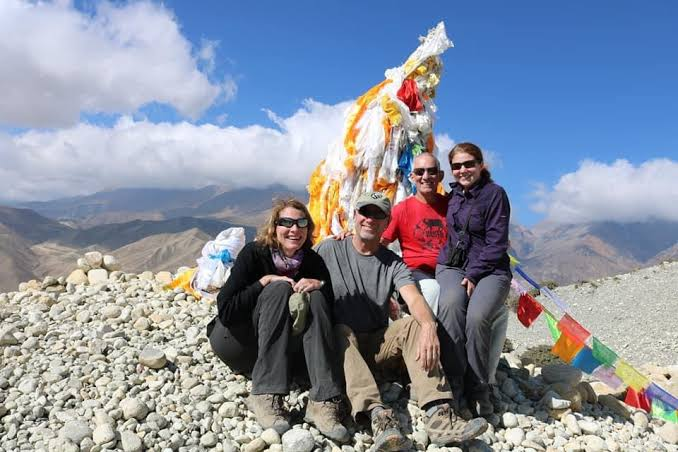
Nepal trekking isn’t a one-size-fits-all decision, and anyone who’s spent time researching routes knows how quickly the options start to blur together. Do you want the dry, wind-carved valleys of the Upper Mustang Round Trek, or something with an actual summit involved, like Mera Peak Climbing? Maybe you’re drawn to alpine lakes and a high pass with a different angle on Everest, which is where the Gokyo Renjo La Pass Trek comes in. Or perhaps crowds aren’t your thing at all, and the Kanchenjunga Circuit Trek’s remoteness is exactly what you’re after. Each of these four routes pulls from a different part of the Himalayan experience — culture, climbing, altitude, and wilderness — and picking the wrong one for your fitness level or time budget is a common, avoidable mistake.
1. Upper Mustang Round Trek: A Journey Beyond the Main Himalayan Trails
Mustang doesn’t look like the Nepal most people picture. Instead of dense forest and rhododendron trails, you get bare cliffs, wind-sculpted canyons, and a landscape that feels closer to the Tibetan plateau than the subtropical hills near Pokhara. That’s not an accident — Upper Mustang sits in the rain shadow of the Annapurna and Dhaulagiri ranges, and centuries of isolation left it with a strong Tibetan-Buddhist identity that’s still visible in its monasteries, chortens, and cave dwellings carved into cliff faces.
Upper Mustang Trek Route
Most itineraries build the Upper Mustang trek route around a handful of anchor points — Jomsom, Kagbeni, Chele, Ghami, Tsarang, and eventually Lo Manthang, the old walled capital. As you push north past Kagbeni, the vegetation thins out fast, and the trail starts weaving through eroded badlands and small farming settlements that seem to appear out of nowhere. The return leg sometimes takes a slightly different path, which gives trekkers a second look at the region without simply retracing their steps.
Upper Mustang Trek Duration
Upper Mustang trek duration depends a lot on how the itinerary is put together — how much of it is walked versus driven, and how many rest or exploration days are built in. Round-trip itineraries that don’t rush between villages leave more room to actually wander Lo Manthang’s narrow lanes or sit with a cup of tea near a monastery instead of just ticking off distance each day.
2. Mera Peak Climbing: Trekking First, Climbing at the Top
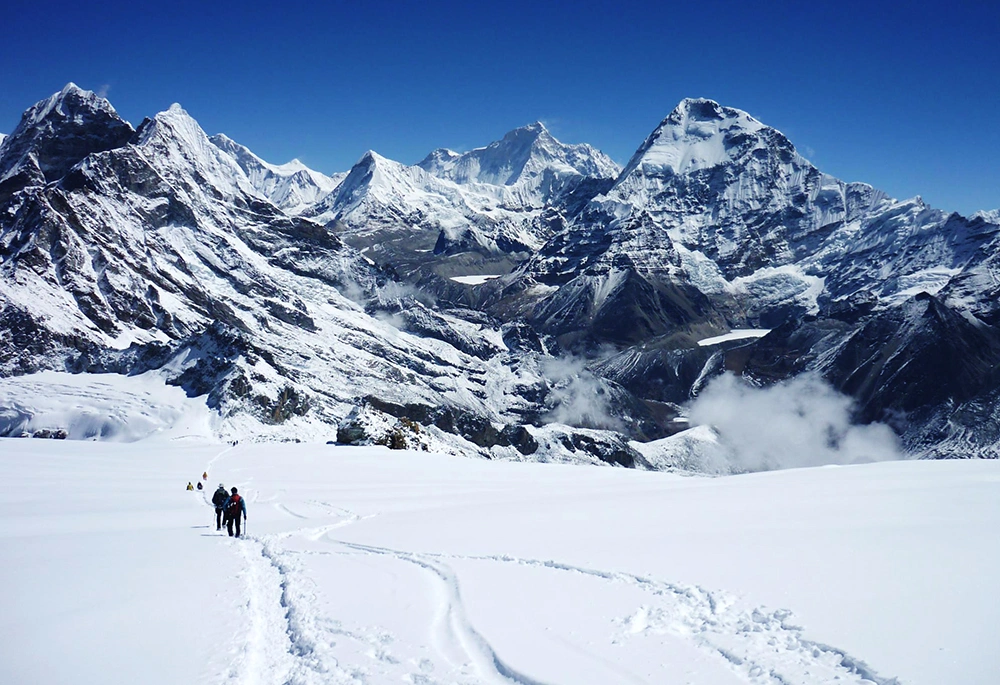
Mera Peak gets filed under “trekking peak,” and while that label is technically accurate, it undersells what’s actually involved. Yes, the approach is a trek in the normal sense — long days, teahouses or camps, gradual altitude gain. But the summit push is a different animal entirely. You’re dealing with glacier travel, crampons, a harness, fixed ropes in sections, and a very early alpine start timed around weather windows and daylight.
That shift from walking to climbing is where a lot of first-timers underestimate the trip. It’s not technical in the way a serious mountaineering objective is, but it does demand basic rope and crampon familiarity, solid acclimatization, and the physical reserve to keep moving at altitude when your body would rather stop.
Mera Peak Climbing Package and Cost
When comparing a Mera Peak Climbing package, look past the headline price and check what’s actually bundled in — permits, guide and porter support, teahouse or camp accommodation, meals, the domestic flights or jeep transfers to reach Lukla or the trailhead, and the climbing gear itself (some operators include group gear like ropes and ladders; others expect you to bring or rent your own).
As for Mera Peak Climbing cost, there’s no honest single number to give here. It shifts with group size, how many acclimatization days are built into the itinerary, which services are included, and even which season you’re climbing in. Anyone quoting one fixed figure without asking what’s included is skipping a step you shouldn’t skip yourself.
3. Gokyo Renjo La Pass Trek: A High-Altitude Route with a Different Everest View
The Gokyo Renjo La Pass Trek takes a slightly sideways route through the Everest region. Instead of following the main Base Camp trail the whole way, it swings up into the Gokyo Valley, past a string of turquoise lakes that look almost unreal against the surrounding grey scree and ice, then climbs over Renjo La into the Bhote Koshi side of the region. Along the way you pass through Sherpa villages that still feel lived-in rather than built for tourism, which is part of the appeal for trekkers who’ve already done — or want to skip — the standard Everest Base Camp crowds.
Renjo La Pass Altitude and Difficulty
Renjo La altitude sits at roughly 5,360 metres, and that number matters more than it might look on paper. At that height, the air is thin enough that even fit trekkers feel it, the final approach is steep, and depending on the season you might be dealing with snow or ice underfoot rather than dry trail. None of that makes the pass off-limits, but it does mean acclimatization days aren’t optional extras — they’re part of what makes the crossing manageable.
For trekkers who want more than one high pass, the Renjo La Pass Trek is often folded into a longer Three Passes-style route through the Everest region, adding Cho La and Kongma La into the mix for a bigger, more demanding loop.
4. Kanchenjunga Circuit Trek: Remote Himalaya in Its Purest Form
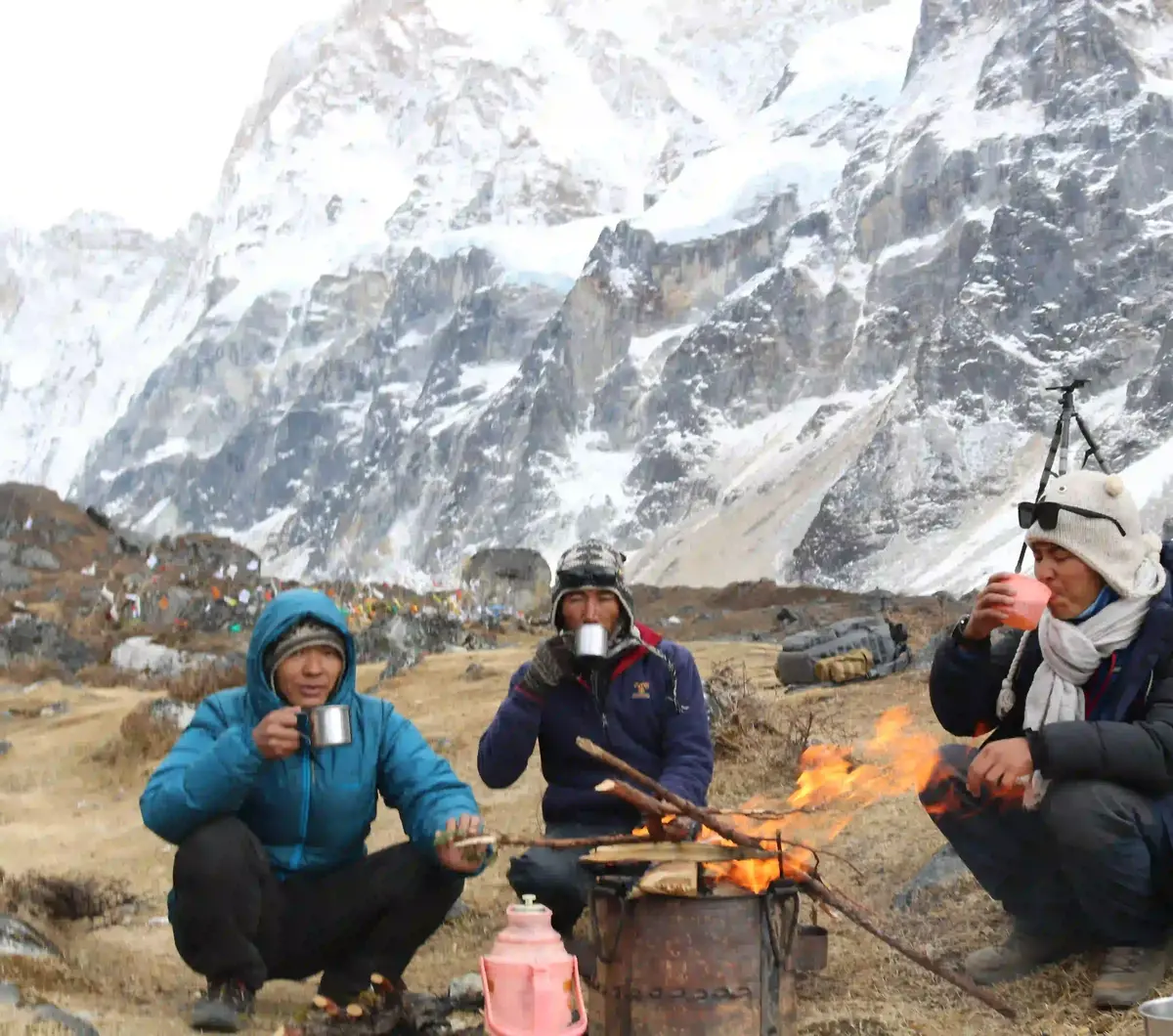
If Everest and Annapurna feel too well-trodden, Kanchenjunga is the opposite end of the spectrum. Tucked into the far east of Nepal near the Sikkim border, the Kanchenjunga Circuit Trek moves through valleys and villages that see a fraction of the foot traffic of the country’s more famous routes. The walking days tend to be longer, the trail infrastructure more basic, and the sense of isolation is really the point rather than a side effect.
Kanchenjunga Trek Guide: Route, Preparation and Experience
A rough Kanchenjunga trek guide typically covers the approach into the region followed by a push toward either the north or south base camp areas — some itineraries manage both sides with a connecting trail, though the exact route varies by operator and season. Because this is a restricted area, arrangements have to go through a registered guide and agency, and accommodation swings between simple teahouses and camping depending on how far into the circuit you go. Physical preparation matters here more than on the busier routes, since there’s less margin for turning back quickly if something goes wrong.
Kanchenjunga Trekking Cost
Kanchenjunga trekking cost is driven by the logistics of getting into a genuinely remote area — permits, transportation to the trailhead, guide and porter wages, food and lodging along the way, trip length, and group size all factor in. Prices here tend to sit higher than more established routes simply because the supply chain for food, fuel, and staff support is longer and harder.
5. How These Four Treks Compare Before You Book
Put side by side, the differences are less about difficulty rankings and more about what kind of trip you actually want. Upper Mustang leans into culture and a desert-like Himalayan landscape that feels almost lunar in places. Mera Peak is for people who want a real climbing objective at the end of their trekking days, not just a viewpoint. Gokyo Renjo La delivers high-altitude drama — glacial lakes, a serious pass — within the well-supported infrastructure of the Everest region. Kanchenjunga is for those chasing remoteness above all else, willing to trade comfort and convenience for solitude.
Your own trekking background should weigh into this more than the scenery photos do. Someone with limited altitude experience and two weeks off work is looking at a very different shortlist than someone who’s already done Base Camp and wants a climbing peak next.
6. Preparation, Permits, Accommodation, Food and Safety
A few practical points apply across all four routes rather than needing repeating four times over.
Physical preparation should focus on cardio fitness, sustained uphill walking with a loaded pack, and general endurance across consecutive days — not just gym strength. Altitude is the bigger variable though: gradual ascent, proper hydration, built-in rest days, and knowing the early signs of altitude sickness (headache, nausea, unusual fatigue) can make the difference between a good trip and a cut-short one.
Permit requirements vary a fair bit. Standard trekking areas need one set of permits, restricted regions like Upper Mustang and Kanchenjunga require special permits and often a licensed guide by law, and peak climbing adds a separate climbing permit on top. Accommodation follows a similar split — established regions run on comfortable teahouses, while remote circuits lean more basic or shift into camping. Food is fairly consistent everywhere: dal bhat remains the trekker’s staple, alongside noodles, rice dishes, soups, and Tibetan-influenced items like momos in the higher, more Tibetan-culture areas.
Travel insurance needs to specifically cover high-altitude trekking, and for Mera Peak, climbing and emergency evacuation as well — a standard travel policy usually won’t cut it. And for restricted or remote regions, working with an established operator such as Action Nepal Treks (among others worth comparing) can simplify the permit and logistics side considerably, particularly for first-time visitors to these areas.
7. Best Season for Each Trek
Season isn’t a single answer across all four routes. Upper Mustang’s rain-shadow position means it stays relatively dry even during Nepal’s monsoon months, giving it a trekking window that doesn’t fully match the rest of the country. Mera Peak is more weather-sensitive on summit day specifically, so timing around stable mountain conditions matters as much as the general season. Gokyo Renjo La is best planned around periods of settled high-altitude weather, since the pass itself can become difficult or unsafe in poor conditions. Kanchenjunga generally follows the standard spring and autumn trekking windows, with snow and rain both capable of affecting trail access given how remote the region is.
8. Which Trek Should You Choose?
Choose Upper Mustang if culture, history, and an unusual dry-valley landscape are what pull you in. Choose Mera Peak if the goal is standing on an actual Himalayan summit, not just trekking near one. Choose Gokyo Renjo La if you want high passes, alpine lakes, and Everest-region views without following the most crowded trail there. Choose Kanchenjunga if remoteness and a genuinely quiet trekking environment matter more to you than convenience.
None of these is objectively “the best” Nepal trek. The right one is whichever matches your available time, fitness, altitude tolerance, and what you’re actually hoping to get out of the walk.
9. FAQs About These Nepal Treks
How long is the Upper Mustang Trek?
It depends on the itinerary — how much is walked versus driven and how many acclimatization or exploration days are included.
What is the Upper Mustang Trek route?
Most versions connect Jomsom, Kagbeni, Chele, Ghami, Tsarang, and Lo Manthang, though exact stops shift by operator.
How difficult is Mera Peak Climbing?
It combines a demanding multi-day trek with genuine technical climbing on summit day, plus the added strain of high altitude.
What does a Mera Peak Climbing package usually include?
Typically transportation, accommodation, meals, permits, guide and porter support, and climbing logistics — though this varies, so check the fine print.
How much does Mera Peak Climbing cost?
There’s no fixed number; it depends on group size, itinerary length, included services, and equipment arrangements.
What is the Renjo La Pass altitude?
Around 5,360 metres, which is high enough to require proper acclimatization before attempting the crossing.
Is the Gokyo Renjo La Pass Trek difficult?
It’s demanding due to sustained high-altitude walking and the pass crossing itself, though not technically as complex as peak climbing.
How much does the Kanchenjunga Trek cost?
Costs vary because of the remote logistics involved — permits, transport, staffing, and trip length all play a role.
Is a guide required for Kanchenjunga?
Yes, as a restricted area, it requires arrangements through a licensed guide and registered agency.
Which of these four treks is best for beginners?
None should be picked on scenery alone — trekking experience, fitness, altitude tolerance, and route length all need to line up with the choice.



