Quick answer Give each organizer a specific job before adding it to a weekend bag. Separate liquids from dry belongings, keep travel essentials accessible, and use small cases only where loose items need a defined home. Pack once, check access with the bag closed, then remove duplicate containers and unused extras.
It is possible to buy so many organizers that the organizers become the packing problem. A weekend bag can end up holding a cable pouch, a spare cable pouch, a small case inside a wash bag and several empty sleeves. Everything is technically grouped, but getting dressed or finding a key still takes too long.
The useful question is not how many packing accessories you own. It is what needs separating during this particular trip. Two nights away normally call for a straightforward arrangement you can understand immediately when you reach the hotel.
Pack for the itinerary you have
List the main parts of the trip: travelling, working if necessary, spending time outside and sleeping. Consider which belongings each part requires. This helps you avoid packing for several hypothetical activities that are unlikely to happen.
Check what the accommodation supplies before adding duplicates. If you need a particular item for work, put it on the list explicitly. A short written list makes it easier to distinguish essentials from the objects that simply happened to be sitting beside the open bag.
Build a simple access hierarchy
Put items needed during the journey near the opening or in an accessible pocket. Keep a travel document or regularly used card in a suitable dedicated holder. They should not be hidden beneath clothing or mixed with a collection of unrelated small accessories.
Objects needed only after arrival can sit farther inside. A spare adapter, a clean accessory or a small personal item may not need its own exterior pocket. Packing by access frequency reduces how often you have to disturb the rest of the bag.
Use categories that reflect storage needs
Separate liquids, clean dry accessories and worn clothing. These categories matter more than matching every container. A tidy arrangement is not useful if a leaking bottle can reach paper or a damp item is closed beside something that needs to stay dry.
Keep bottles in a suitable wash bag and follow their closure instructions. Let damp items dry where possible rather than sealing them away for the rest of the trip. A small hard case is a place for compatible contents, not a reason to combine incompatible ones.
Reserve rigid storage for a specific problem
Some small belongings benefit from a container that keeps its shape among clothes and shoes. Others are better in a flexible pouch that can flatten when empty. Decide what pressure, rubbing or loss problem you are trying to solve before selecting the format.
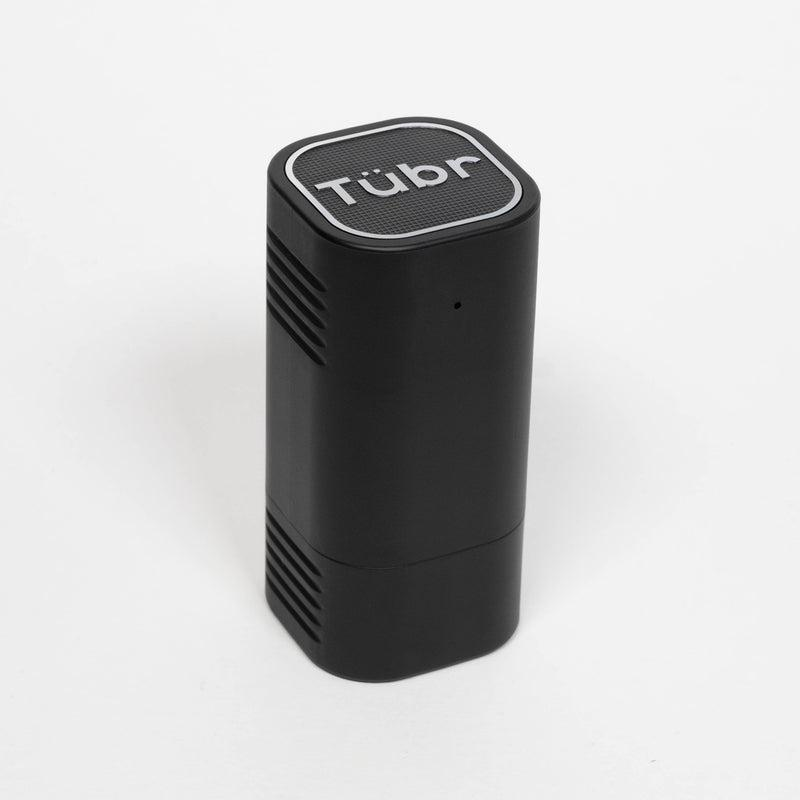
The Tübr Stash is a compact rigid option to compare with your small-item list. Check the exact internal dimensions and closure requirements before deciding what will fit. Its fixed shape remains part of your luggage volume even when it is empty.
Measure awkward accessories before packing
A connector, protective cap or attached key ring can make an item longer than it first appears. Include these parts when checking a case. Do not force a lid against something simply because the accessory seems close to the advertised dimensions.
Remember that exterior measurements are not usable interior space. Wall thickness and lid overlap reduce the room available. If a retailer supplies only external dimensions, ask for the internal measurements or choose a format you can check directly.
Try the arrival routine at home
Close the bag, set it down as you would in a hotel room, and take out the first few things you expect to need. Notice whether finding one item means removing several others. A brief trial often exposes access problems that an attractive flat-lay photograph will not show.
Repeat the check with your return journey in mind. Clothes rarely fold as neatly after a trip, and a spare tote or jacket may change the available space. Leave some room rather than relying on a precise packing arrangement you cannot reproduce later.
Keep useful items visible in the room
A small case can keep compatible belongings together instead of spreading them across a bedside table. Give it one landing spot and keep the lid or base nearby when open. Avoid placing small objects where they can roll behind furniture.
Before leaving, check the bathroom, charging area and bedside surface against your short list. Return the kit to its usual pocket before packing the last clothes. A consistent place is more useful than trying to remember several temporary hiding spots.
Review after the trip
Unpack organizers fully when you get home. Remove receipts and debris, clean containers according to their instructions, and let them dry before storage. An apparently ready-made kit may contain something used up or left damp during the trip.
Make one change for next time. Remove an unused duplicate or move something that was awkward to reach. Over a few trips, the bag should become easier to pack without steadily accumulating more containers.
Leave a clear place for the journey home
Before the trip, decide where used clothing and any extra items will go on the return journey. A bag packed to its limit at home leaves little flexibility for a jacket taken off during travel or something you need to keep separate after use.
A small amount of spare room can be more useful than another compartment. Keep your dry-accessory kit in its usual position while other contents change around it. If the arrangement only works with freshly folded clothing and every object placed perfectly, simplify it. You should be able to pack for home without spreading everything across the room and starting the whole process again.
Frequently asked questions
How many organizers does a weekend bag need
There is no fixed number. Use one where separation or access solves a clear problem. If you cannot explain an organizer’s job, leave it out of the first packing attempt.
Should I use a sealed case for toiletries
Use packaging suitable for the specific products. A general storage case is not automatically designed for liquids, and its seal does not make every item compatible with its materials.
What is the easiest packing improvement
Remove duplicates and give important items consistent homes. That usually improves access more than adding another set of matching pouches.