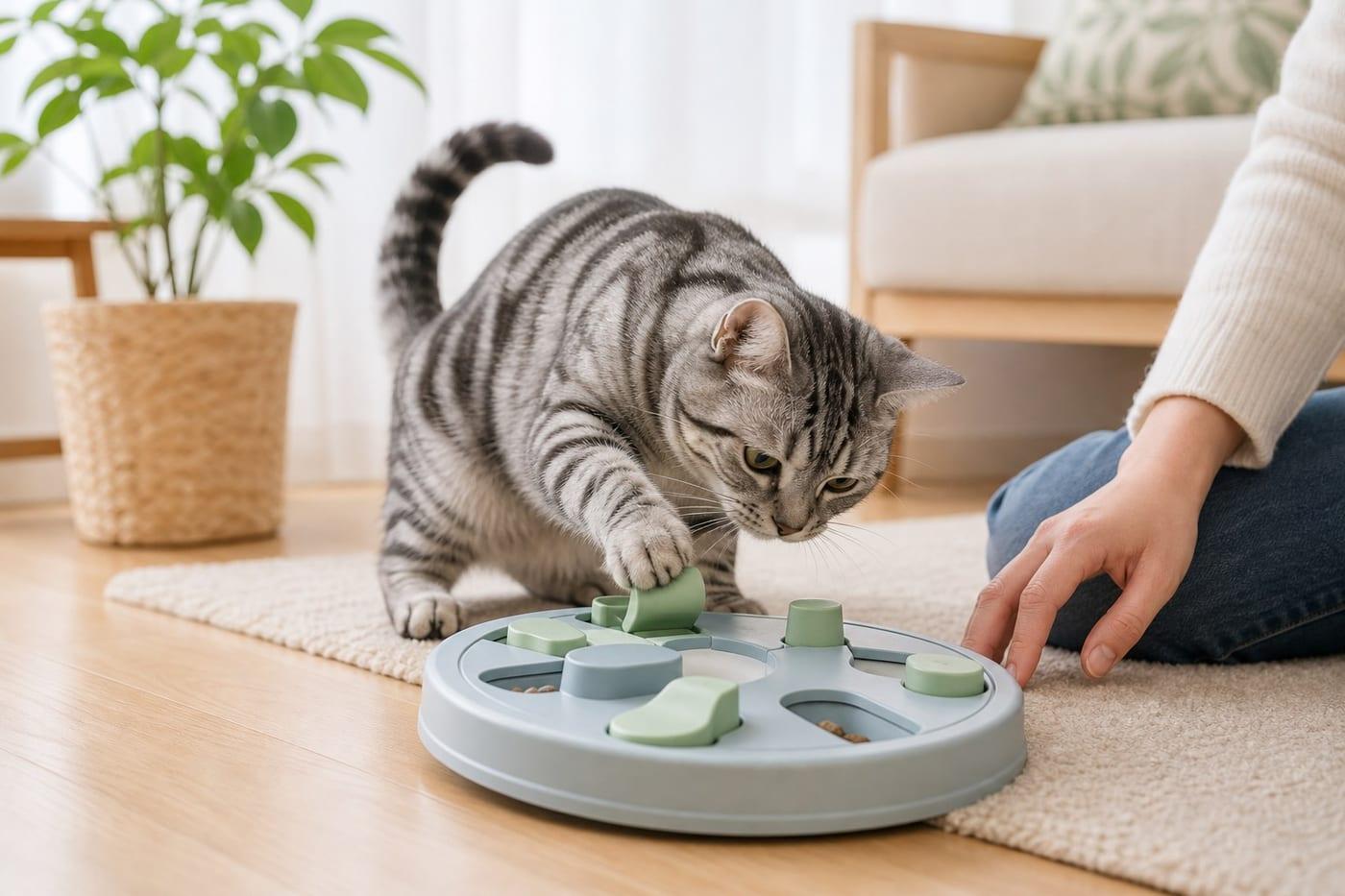
An indoor cat’s food arrives in a bowl, and it is often gone in a minute or two. That is convenient for us, but it removes everything cats would normally do to get a meal: search, stalk, capture and work at it. International Cat Care recommends feeding several, if not all, of a cat’s food portions in puzzle feeders, because they make meals last longer and give cats a mental workout (International Cat Care). Treat dispensing toys are the easiest way to start.
What the research says
In 2016, a team of veterinarians and cat behavior specialists reviewed food puzzles in the Journal of Feline Medicine and Surgery. They noted that the science is still young, and shared more than 30 cases from their own practices (Vet Surgeon). The benefits they observed included weight loss, less aggression toward people and other cats, less fear and anxiety, fewer attention-seeking behaviors and resolved litter box avoidance (Scientific American).
A later pilot study measured activity with collars and found food puzzles didn’t make cats noticeably more active. Every cat in it switched to eating from puzzles without trouble, though (AVSAB). The takeaway: these toys are about slower eating and mental stimulation, not burning lots of calories.
Types of cat treat dispensing toys
| Type | How it works | Best food | Good for |
| Mobile toys (balls, eggs, tubes) | Your cat rolls or bats it and dry food falls out | Kibble, small dry treats | Active, playful cats |
| Stationary puzzles (cups, wells, channels) | Your cat fishes food out with a paw or licks it out | Dry or wet food | Cats who love using their paws |
| Lick toys and lick mats | Your cat licks soft food out of grooves; freezing makes it last | Wet food, paste treats | Beginners, kittens, winding down |
Cats have strong preferences, so it is worth trying more than one type. A cat who ignores a rolling ball may love licking food out of a frozen toy.
How to introduce one without frustrating your cat
- Start almost too easy. Use loose kibble or a thin, unfrozen layer of wet food, with some food visible.
- Put it where your cat already eats. A familiar spot makes a new object less suspicious.
- Use a favorite food. The first session should feel like a reward, not a test.
- Raise the challenge slowly. Fill it fuller, then try a short freeze, then a longer one.
- Change one meal, not all of them. Keep feeding normally while your cat learns, and check they are eating their usual amount. A cat that stops eating needs a vet promptly.
- Give each cat their own toy. In multi-cat homes, set toys in separate spots so a confident cat does not finish everyone’s.
What to put inside and how much
Whatever goes in the toy counts as food, so take it from your cat’s daily portion. Safe fillings include your cat’s own wet food or pâté, a lickable cat paste, and plain, boneless cooked chicken or fish. Keep onion and garlic out (they are in most store-bought broth and gravy), along with dairy, salty stock and dog food.
If your cat is on a prescription diet, has kidney disease or is diabetic, ask your vet before adding any filling.
Where lick-and-freeze toys fit
Some cats prefer licking to batting, which makes lick toys a good first step. Freezbone’s cat treat dispensing toys focus on that style: fillable FreezPaw toys such as the FreezRing, which holds up to 50 g, a paw-shaped Relax Lick Pad, and slow feeders for whole wet meals. According to Freezbone, a paste-filled FreezPaw toy typically holds a cat’s attention for 10 to 20 minutes, and longer when frozen.
Lick toys also help outside mealtimes. Set one beside your cat during brushing or nail trims, and their attention stays on the treat instead of the clippers.
Keep it clean and keep it fresh
Wash food toys after every use, especially with wet or frozen fillings. Rotate between two or three types each week so the challenge stays interesting, and retire any toy your cat has chewed pieces off.
Cat treat dispensing toys work best as part of daily feeding rather than an occasional novelty. This week, serve one portion of your cat’s usual wet food in a lick toy, unfrozen, and see how long it takes. Freeze the next one, and you’ll know whether your cat is ready for more of a challenge.



