Most of us hope we will never face an emergency that significantly disrupts everyday life. But severe weather, extended power outages, unexpected travel delays, and other situations can happen, and a little preparation can make them considerably less stressful.
You do not need to become a survival expert or prepare for every imaginable catastrophe. A thoughtful collection of reliable books and resources can simply help you feel more informed about what to do when normal routines are interrupted.
Whether you are building an emergency kit for your family or simply want to become more self-sufficient, here are some useful topics to include in an emergency preparedness library.
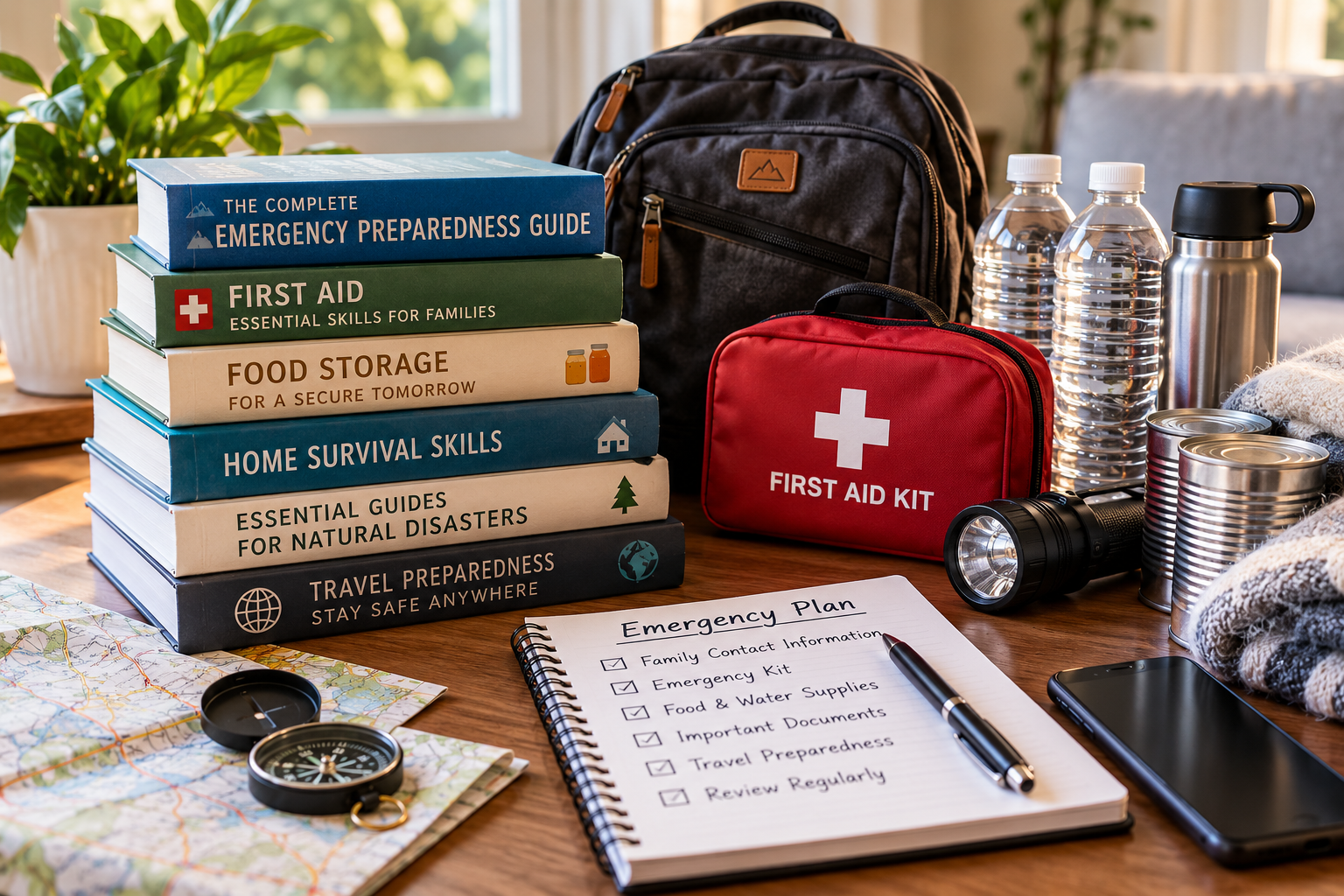
A practical emergency preparedness library can help families keep reliable information and essential resources close at hand.Start With A Reliable Emergency Preparedness Guide
A good general preparedness book is a sensible starting point.
Look for resources that cover practical topics such as creating a household emergency plan, assembling an emergency kit, storing food and water, preparing for power outages, and communicating with family members when normal services are unavailable.
When information involves health, safety, or emergency response, pay attention to the source and publication date. Guidance can change, and a decades-old book should not automatically replace current recommendations from qualified emergency-management and health authorities.
Include Basic First Aid Resources
A first aid reference can be useful to keep with your household emergency supplies.
Choose information from reputable medical or emergency-response organizations and consider taking an accredited first aid and CPR course as well. Reading about first aid is useful, but hands-on training can help you become more confident about what to do in an actual emergency.
Keep emergency phone numbers and important medical information somewhere accessible too.
Learn About Food And Water Preparedness
Food and safe drinking water are fundamental parts of emergency planning.
A good preparedness resource can help you understand what foods store well, how to rotate supplies, what equipment may be useful during a power outage, and how to plan around the needs of children, older family members, and pets.
Avoid relying on unverified preservation techniques simply because they are described as traditional or natural. Food and water safety are areas where following current, reputable guidance matters.
Add Practical Home Skills
Emergency preparedness does not have to mean preparing for an extreme disaster.
Some of the most useful skills are surprisingly ordinary.
Knowing how to shut off household utilities when appropriate, use a fire extinguisher, maintain flashlights and batteries, prepare simple meals without your usual appliances, and keep important documents organized can all make unexpected situations easier to manage.
Books about basic home maintenance, gardening, cooking, and other practical skills can therefore earn a place in a preparedness library too.
Do Not Forget Travel Preparedness
Travel introduces its own set of unexpected situations, from severe weather and canceled transportation to lost belongings or being somewhere unfamiliar during a local emergency.
Before a trip, save important reservation details and emergency contacts somewhere you can access them even if your phone loses service. Keep essential medications and important documents with you rather than in inaccessible luggage.
I also like having reading material downloaded before a trip. Services such as All You Can Books can provide access to ebooks and audiobooks on a phone or tablet, whether you are looking for educational material or simply something entertaining during a long delay.
Digital resources are convenient, but keeping a few essential pieces of information available offline is smart too.
Create A Family Emergency Plan
Books can teach you what to do, but your household still needs a plan that makes sense for your particular circumstances.
Talk about where family members would meet if you became separated, who you would contact, and how you would communicate if cellular networks were overloaded.
Families with children should make the conversation age appropriate rather than frightening. The goal is to help everyone understand the plan and feel more prepared.
And remember your pets. Food, water, medications, carriers, identification, and veterinary information should be considered when building household emergency supplies.
Keep Important Information On Paper
We rely on our phones for almost everything, which makes it surprisingly easy to forget information we once knew by heart.
Consider keeping a written list of important phone numbers, medical information, insurance contacts, addresses, and other essential details with your emergency supplies.
A portable battery or power bank is useful, but a piece of paper never needs charging.
Review Your Resources Regularly
Emergency preparation is not something you do once and forget forever.
Check your supplies periodically. Replace expired items, recharge or replace batteries, update contact information, and reconsider your family’s needs as circumstances change.
Do the same with your books and reference materials. If recommendations have changed substantially since something was published, replace or supplement it with more current guidance.
A Note About Survival Books
There is a large market for books promising forgotten survival secrets, ancient remedies, and techniques supposedly capable of getting readers through almost any disaster.
Some may contain interesting historical information or genuinely useful practical ideas. But extraordinary claims deserve scrutiny.
Treat survival books as supplementary reading, not as substitutes for current guidance from emergency-management agencies, medical professionals, public-health authorities, or other qualified sources.
That distinction becomes especially important when advice concerns medical treatment, food preservation, water safety, severe weather, or other situations in which incorrect information can cause real harm.
Final Thoughts
Emergency preparedness does not have to come from fear.
At its most practical, it is simply about knowing that if the lights go out, severe weather arrives, travel plans fall apart, or another unexpected situation occurs, your family has some basic supplies, reliable information, and a plan.
Build your preparedness library gradually. Choose trustworthy resources, learn a few practical skills, keep essential information accessible, and revisit your plan from time to time.
You may never need most of it.
And that would be perfectly fine.



