Whether you are just beginning your loc journey or have been growing your locs for years, there may come a time when you want a little more length, volume, or versatility. That is where loc extensions can come in.
Loc extensions offer a way to achieve the look of mature, longer locs without waiting years for your natural hair to reach your desired length. When properly installed and maintained, they can blend beautifully with natural hair and provide a long-lasting option for anyone who loves the look of locs.
If you are considering loc extensions, here is what you should know before getting started.
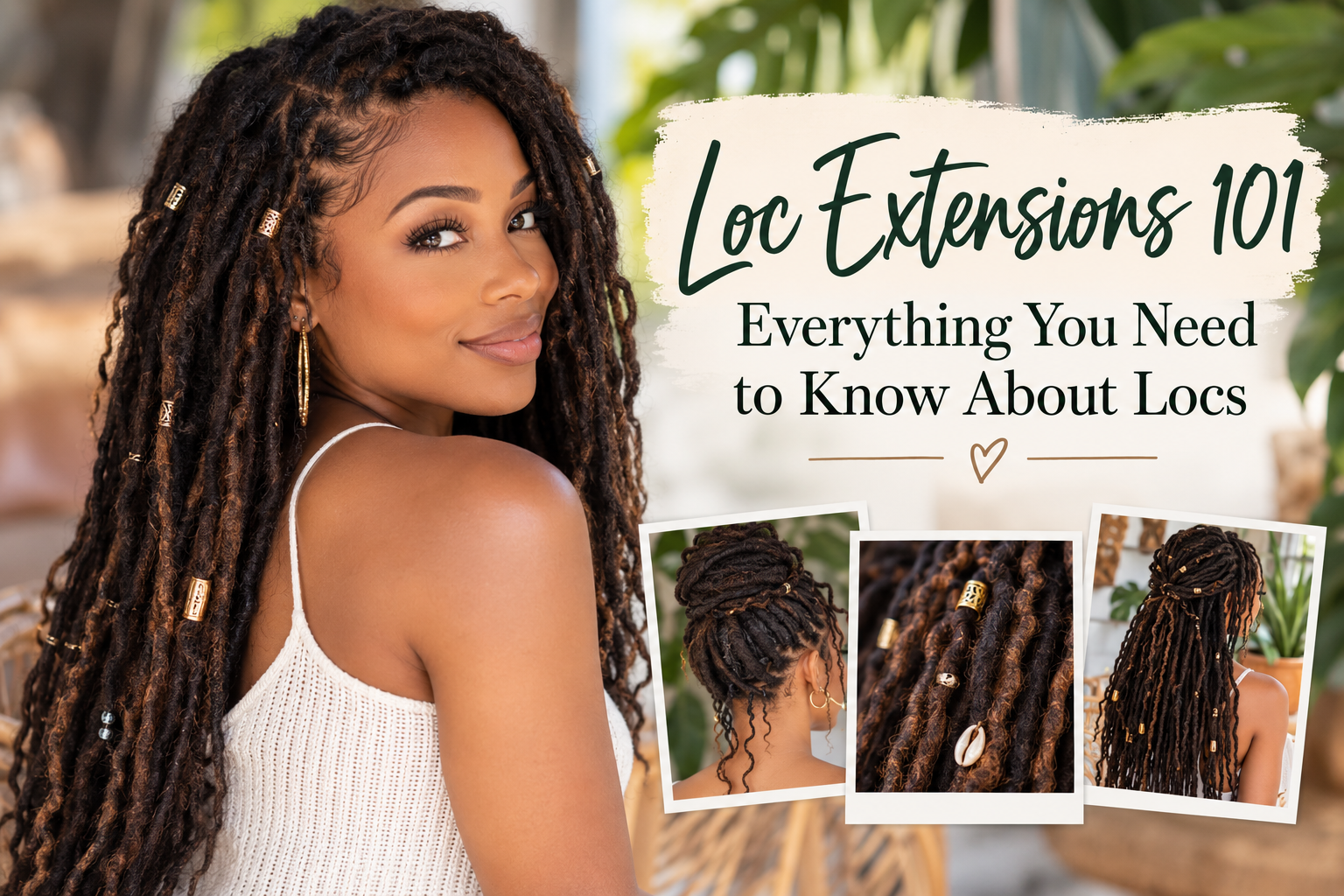
How Can Loc Extensions Help?
The beginning stages of growing locs can require patience. If your natural hair is short, your locs may take time to mature and develop the length and appearance you ultimately want.
Rather than becoming discouraged with the process, some people choose loc extensions as a way to add immediate length while allowing their natural hair to continue growing.
Unlike temporary styles, properly installed loc extensions are designed to become part of your existing locs. This makes them an appealing option for people who want longer locs without waiting for years of natural growth.
What Are Loc Extensions?
Loc extensions are sections of hair that are attached to natural hair or existing locs to create additional length.
High-quality permanent loc extensions are typically made with human hair so they can more closely resemble the texture and appearance of naturally grown locs. Depending on the installation method, they can be added without glue or harsh chemicals.
One of the most important parts of creating natural-looking loc extensions is matching the size and density of the extensions to your natural hair. A skilled loctician can evaluate your hair and determine an appropriate size and installation method.
Faux Locs vs. Loc Extensions: What Is the Difference?
Although the terms are sometimes used interchangeably, faux locs and permanent loc extensions are not the same thing.
Faux locs are a temporary protective hairstyle. Installation often involves braiding or twisting the natural hair and then wrapping synthetic or human hair around it. Like box braids and other protective styles, faux locs are generally intended to be worn temporarily and removed later.
Permanent loc extensions, on the other hand, are attached directly to natural hair with the intention of remaining in place as the natural locs grow and mature.
Faux locs are often made with Marley hair, Kanekalon hair, or other synthetic fibers, while permanent extensions are commonly made from human hair to create a more natural appearance.
Because permanent loc extensions are intended for long-term wear, the size, weight, density, and installation technique are especially important.
Things To Know Before Getting Loc Extensions
1. Can Loc Extensions Affect Hair Growth?
Loc extensions themselves do not stop natural hair from growing. However, extensions that are too heavy or installed with excessive tension may put unnecessary stress on the natural hair.
That is why choosing an appropriate extension-to-hair ratio matters.
If an extension is significantly thicker or heavier than the natural loc supporting it, the added weight may eventually create a weak point where the extension and natural hair meet. Over time, excessive tension can contribute to thinning or breakage.
Before committing to permanent loc extensions, consider having your hair evaluated by an experienced loctician who can determine the appropriate size and weight for your natural hair.
2. Can Loc Extensions Be Permanent?
Loc extensions can be worn long term when they are properly installed and cared for.
Human-hair extensions are generally preferred for permanent installations because they can behave more like natural hair and can typically be washed, maintained, and styled along with your natural locs.
As your own hair grows, the goal is for the extension and natural loc to blend together over time.
The quality of the installation matters tremendously, so this is one beauty service where doing your research beforehand is worthwhile.
3. Be Careful With the Wrapping Method
The installation technique used for temporary faux locs is not necessarily appropriate for permanent loc extensions.
Wrapping hair around the natural hair can work beautifully for a temporary protective style, but permanent extensions require an installation method designed for long-term wear and natural hair growth.
Before your appointment, ask your stylist exactly how the extensions will be attached and how that method will accommodate your hair as it grows.
If your goal is to wear your extensions for an extended period, consider using human hair rather than synthetic hair. Human hair generally provides more flexibility for long-term washing, maintenance, and styling.
4. Pay Attention to Fragile Areas
Not every section of your hair has the same density or strength.
Areas such as the nape and hairline may be more delicate, so adding an extension that is too large or heavy can create unnecessary tension.
A knowledgeable loctician should take the condition of your natural hair into account rather than installing identical extensions throughout your entire head.
If an area is particularly fragile, your stylist may recommend a smaller or lighter extension—or waiting until the natural hair is strong enough to support one.
Protecting the health of your natural hair should always be more important than achieving a particular length.
How To Maintain Loc Extensions
Once your extensions are installed, good maintenance can help keep both your natural hair and your extensions looking and feeling their best.
Always follow the specific aftercare instructions provided by your loctician, particularly during the first several weeks after installation.
1. Cleanse Gently
Keeping your scalp and locs clean is an important part of maintaining them, but newly installed extensions may require special care while the attachment points settle.
When it is time to wash your hair, choose a gentle cleanser and thoroughly rinse your scalp and locs to help prevent product buildup.
If you regularly use oils, gels, or other styling products, proper cleansing becomes especially important.
Your loctician may recommend waiting a specific amount of time before your first wash, so follow the instructions given for your particular installation rather than assuming that every set of extensions should be treated the same way.
2. Keep Your Locs Hydrated
Human hair extensions can become dry, just like natural hair.
Weather, sun exposure, chlorine, salt water, styling products, and chemical treatments can all affect how your locs look and feel.
A lightweight, water-based moisturizing product can help maintain hydration without creating excessive buildup. Some people also use a light mist followed by a small amount of oil, depending on what works best for their hair.
The key is finding a routine that keeps your locs moisturized without saturating them with heavy products.
3. Protect Your Locs While You Sleep
Nighttime protection is one of the easiest ways to care for your loc extensions.
A satin or silk scarf, bonnet, or pillowcase can help reduce friction while you sleep. Less friction may mean less frizz and fewer flyaways, while also making your hair easier to manage in the morning.
It is a simple habit, but consistency can make a noticeable difference in maintaining your style.
4. Choose Hair Products Carefully
Not every product marketed for locs will be right for your particular hair or extensions.
Look for products that provide the hold or moisture you need without leaving excessive residue or buildup. If you have a sensitive scalp, pay particular attention to ingredients and discontinue anything that causes irritation.
Before purchasing a new product, research the brand and read reviews from people with similar hair and locs. And that same principle applies whenever you are researching products or services online: comparing reputable resources, customer experiences, and help care options can make it easier to make an informed choice.
When in doubt, ask your loctician which products they recommend for your specific installation.
5. Avoid Over-Manipulating New Extensions
One of the most exciting things about longer locs is experimenting with new hairstyles, but newly installed extensions may need some time before they are ready for frequent styling.
Excessive pulling, twisting, or manipulation can place unnecessary tension on the attachment points, particularly soon after installation.
Consider wearing your extensions in a simple style during the initial settling period and follow your loctician’s recommendations about when to begin experimenting with more elaborate looks.
Once your extensions are secure, you can start enjoying more of the styling versatility that probably attracted you to longer locs in the first place.
Are Loc Extensions Right For You?
Loc extensions can be a beautiful option for someone who wants additional length without waiting years for their natural locs to grow.
But beautiful results begin with healthy natural hair, appropriate extensions, and proper installation.
Take the time to research your options, find an experienced professional, ask questions about their installation method, and understand the maintenance involved before making your decision.
Most importantly, remember that loc extensions should complement your natural hair—not compromise its health. With the right installation and consistent care, you can enjoy the length and versatility you want while continuing to nurture your natural loc journey.



